I’m currently just finishing my first year as a social work student at University College Dublin (UCD), Ireland, as part of the Professional Masters in Social Work. I decided to become a social worker for many reasons. I’ve worked for over 15 years in social care with homeless people in Dublin. I love working with and helping people. I believe the world is a better place as long as we have kindness.
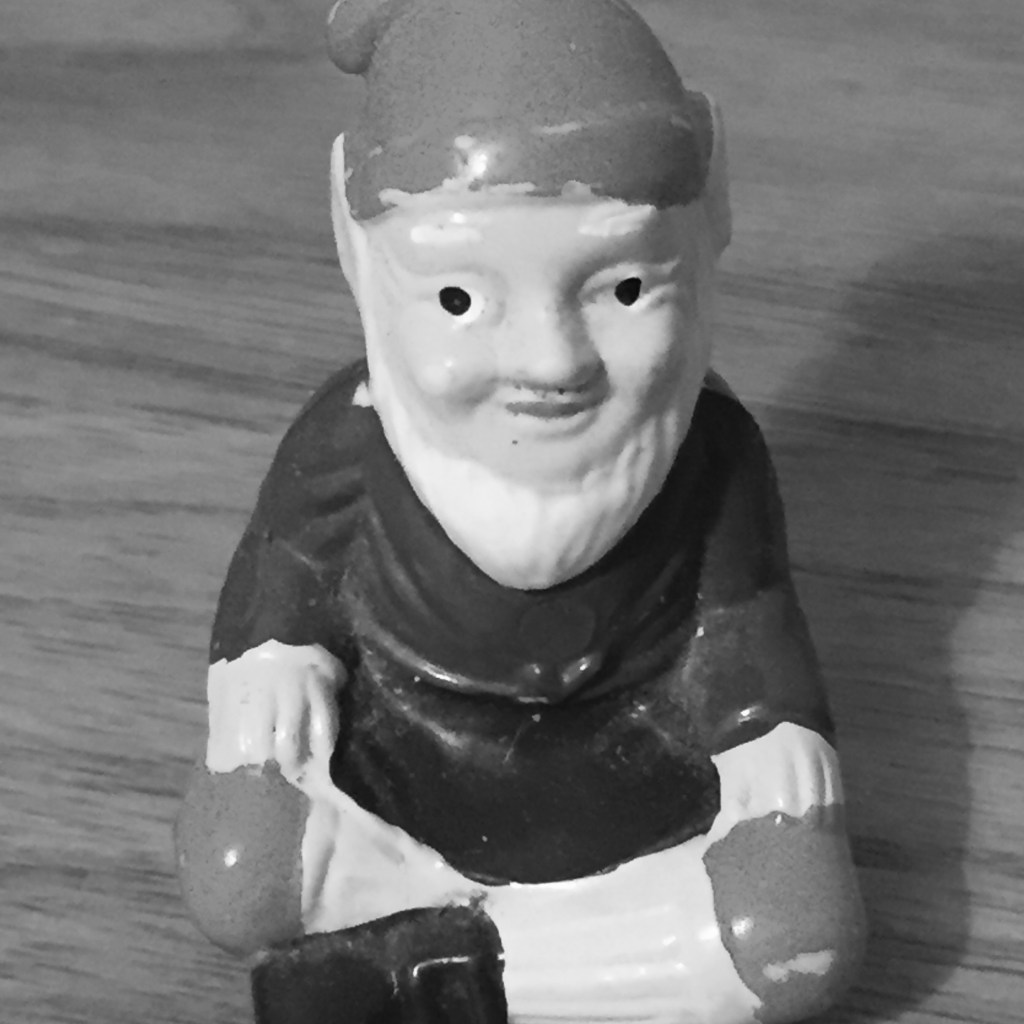
I choseGnomeo because …
it has sentimental value to me, in that I’ve had it since I was seven years old. It was given to me by another boy in my class. To me it represents kindness. Kindness from one human being to another and it reminds me that we should always treat people with kindness. ‘Gnomeo’ has been with me throughout my educational journey and is my social work mascot who will be there with me to spread kindness throughout my social work career.
From a young age I expressed an interest in studying social work as I have always had an interest in people and human rights. I knew I wanted a career where I could work directly with people and as a young school leaver had an idealistic view of being able to change the world! After school, I completed a degree in Social Science and went travelling with the intention of studying social work on my return. Living, working and travelling in New Zealand and Australia increased my interest in being a social worker and this life experience was vital when I completed the Masters in Social Work in UCC (Cork, Ireland).
Throughout my career, I worked with children and families in the areas of homelessness, sexual health, separated children seeking asylum and alternative care. The importance of interdisciplinary collaboration and cooperation was evident in all areas of work and at the core of my practice is the importance of relationships. I have a strong interest in policy and the application of policies in practice. I moved to Higher Education in recent years and am enjoying bringing my practice experience into the classroom working with student social workers as they embark on their journey and hearing their stories of what brought them to social work.
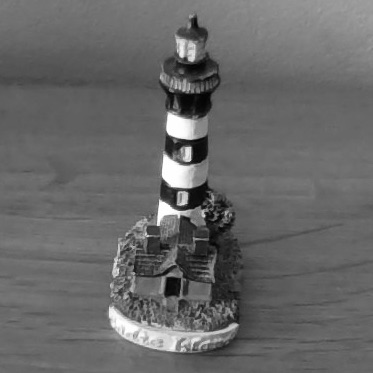
I chose this Lighthouse because …
I was reading a book about the Outer Banks and my brother lived in North Carolina at the time and bought me this lighthouse when he was there. The timing of the gift was special as it was following a family bereavement and until I reflected on the object for this project, I hadn’t realised how attached I have become to this little lighthouse. It illustrated how there is always guidance on our journey through life, even in the darker times as well as the importance of staying connected.
I kept it on my desk in practice for years. I have more recently moved it to my home office desk.
So, I love what it symbolises – strength, hope, guidance and stability. For those at sea, the lighthouse guides and helps them navigate on their journey.
Social workers guide people during times in their lives when they need support in a variety of settings. However, listening to difficult situations on a regular basic can take its toll on practitioners, add in system changes and resource issues and burnout is a reality. This lighthouse represents the resilience and strength of practitioners.
Over the years in social work, there have been many changes and this lighthouse illustrates to me how some things remain stable despite the changes or storms around them. Social worker as a profession continues to provide support and offer guidance and hope for people despite the many changes. My values, beliefs and strive for social justice and human rights and a basic respect for others are at the core of my work and inspire me to continue on my journey of social work.
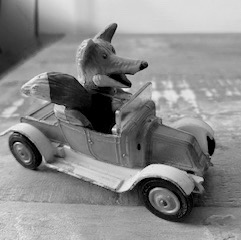
I choseBasil (who is in his lovely diecast Corgi car) because …
… he reminds me of what I have been through and how I have put this experience to good use on my (car) journey!
I first had Basil when I was 6. My dad gave him to me, he was a ‘ducker and diver’ and one of his things was being a car dealer. He also had serious mental illness and could be violent and abusive. My mother could do little about it, as she, my brother and me all suffered at his hands. As a result of abuse and lack of care I was moved between family and friends, and then into children’s homes. The only thing I had to take with me was my Basil car, which was so important to me as it was like a talisman – if Basil was with me things couldn’t get too bad.
When I was 12 a boy in the home I was in stamped on Basil and smashed him to pieces. I remember at the time feeling like he had killed Basil! I went on to become a social worker due to my experiences as I felt I might have something to offer – an understanding of what others might be going through.
When I had my own son I looked online and found a new Basil car – it seemed important as I now had my own family. I have no contact with any of my birth family but Basil remains an important object in reminding me what I have been through and how I was able to repair and heal through being a social worker and a mum.
I had never heard of social work before I formed an unrequited crush on a female friend at university whose mother was a social worker and who was planning to go into the profession herself. After graduating I went off to an unhappy academic master’s program in a subject completely unrelated to social work, at the end of which, somewhat directionless, I volunteered to work in a summer adventure playground in Reading (in Berkshire, England). It was the most exhausting but completely fulfilling experience of my life. I was recruited afterwards by the playground organisers to run a local youth club, at which point I applied to do a social work course in Canterbury with the idea of joining up with my then-girlfriend, who was going to be training there as a genealogist (long before 23andme was ever thought of). The girlfriend, naturally, didn’t last, but the career choice stuck.
Like many social workers before me, I subsequently moved up into management and policy work. Later, I found myself crossing “The Pond” and dabbling in research into American health care. Even now, though, social work keeps finding me: firstly when I participated in a three year project looking at the U.S. social work workforce, and currently through my involvement in an evaluation of children’s mental health services that’s asking the same question we’ve been asking since we invented the poorhouse: how do we stop residential and penal institutions being the default “solution” for people who don’t quite fit in?
My object is a car, a 1973 Triumph Dolomite. I bought it for £1500 when it was three years old and with only 19,000 miles on the clock. I really loved that car, with its walnut dashboard, symmetrically-arranged instrument dials, comfortable seats and lively burst of acceleration (at least by the standards of the time).
I chose the1973 Triumph Dolomitebecause …
I reflect on it now as a symbol of my entry into the social work profession (courtesy of a loan from the local authority that funded my social work course when I was a trainee social worker), of my escape from student financial penury (I had paid less than £100 in total for my previous two cars) and as perhaps the most important tool of my future trade (rivalled only by my diary).
In my daily social work routine the Dolomite served as transport for the home visits that predominated my daily practice, as a lunch-room for the sandwich grabbed between visits, and as an office for carrying out my recording duties between visits. It transported my younger clients to the intermediate treatment ‘camps’ that were introduced as an alternative to incarceration, carried them off to assessment centres following the breakdown of an adoption or fostering situation, retrieved them from the surprisingly distant destinations that they somehow managed to run away to, and acted as an ‘interview room’ during rides home from school that I sometimes offered. In one bizarre case the car provided light relief for a regular series of court-ordered visits to three children whose parents had instructed them not to talk to their supervising social workers, my coworker and I choosing to take them on 45-minute rides into the nearby countryside as an alternative to 45 minutes of deathly silence in the family’s front room.
For my older clients the car provided transport to the much-needed residential respite care that enabled client and carer to postpone the use of full-time residential or nursing care for a while. Like my older clients, the Dolomite eventually died, but it was replaced with a later version of the same model, just as my departing clients were always replaced with new referrals. Whenever I look back at my days ‘on the patch,’ I can’t think of my social work practice without thinking of the car that made it all possible.
I am a Social Worker from London working in the field of child protection.
I had always known I wanted to work in a field that would involve promoting positive change. However, I wasn’t sure exactly what career to pursue. My mother has always worked with vulnerable service users in the voluntary sector and encouraged me to pursue a career in social work. As a teenager I remember hearing of high-profile child deaths on the news where social workers were criticised, and although this may have deterred people from joining the profession, it made me want to do it more. Regardless of the public perception of the field, I knew I wanted to work in a role where I would be part of a profession that tries to prevent child abuse in all forms from happening.
I choseDumbellbecause …
… it represents strength and empowerment, to both myself and to the service users I work with. Keeping an active lifestyle is a huge part of maintaining my own mental wellbeing and starting my day with a workout sets me up in a positive way, which helps me to manage the unpredictable days of social work.
The dumbbell to me also represents the strength it requires for families to accept that changes need to be made to ensure their children are safe, which is a huge and difficult step to take. Not only is it important for them to recognise changes are needed, they also need to meaningfully engage with support to enable those changes to occur and be sustained once social workers are no longer involved. Social workers can provide the family with the ‘dumbbell’, but the family must be the ones to lift it and put the work in to see the changes within their own lives.
My brother and I had a rough childhood. He is my younger brother by 7 years and he has ADHD to add to the mix. Our parents spilt from their abusive relationship and we lived in a refuge with my mum. My brother was 16 months old and I was 8. I had a social worker who used to pick me up and take me to a therapy group for children who had witnessed domestic abuse.
As I grew older my mum became very avoidant of services and teachers and anyone really who tried to tell her how she should or should not be parenting my brother, so at that point my 18 year old self had to step up and attend ‘Team around the child’ meetings and deal with school, etc. in order to help my mum and ultimately be there for my brother. I had no idea at that time that this IS fundamentally social work.
I chose Little Yellow Car because …
… It was my brother’s from when he was quite young. It’s a toy car, a yellow, very battered mini. He is the reason I initially started my career helping and supporting people.
Two months after I started my social work training, Covid had hit and I needed to create a space in my house to work from, (I now live in my mum’s old house, our permanent safe home after the refuge days, in fact). So I was clearing out the spare room which had been my brother’s bedroom for many years and I found this yellow toy car, with its battered exterior and black, hand-painted roof (thanks to my brother’s need to modify everything!) and I instantly remembered the whole journey that has brought me to where I am right now.
That toy car now sits on the desk where I work every day, a reminder that each day is a journey for myself and the people I encounter. When I look at the car I remember no matter how difficult the journey has been the wheels can keep turning, opening up new opportunities.
When other people come into my office they all go straight for the toy car and give it a push while asking ‘why is that in here?’; and I simply smile and say because I like it.
I am Laura Oginni from Nigeria. I have just started an MA course in Social Work at the University of Essex, Colchester Campus, which is in line with my vision to make a difference to people’s lives and to be of immense help to those in need.
I have 8 years experience in care settings with people who lack capacity in making informed decision about their care supports and general wellbeing, which may be as a result of mental disability or cognitive disorder resulting in learning difficulties and brain injury. This was what inspired my interest in the social work profession so as to enable me carry out my duties efficiently while supporting service users and their families.
In my current role as a Team Leader, I have gained confidence and experience when supporting vulnerable adults who sometimes are presenting with challenging behaviour. I have undergone several trainings which have enhanced my performance in working with other professionals in clients’ support plans.
I choseSewing Machine and Basketbecause …
I can remember when I was growing up back in Nigeria that my mother would always remind us to keep our clothes that need alteration in a particular basket in the store room in our house so that she could mend them for us.
I will compare the sewing machine to the social work profession that supports the diversity of vulnerable people, families, groups and communities to enhance their individual and collective well-being. The basket represents the residential homes, communities, nursing homes etc., where vulnerable people are rehabilitated and integrated back into the communities.
My name is David Sunny IKHILE. I am an MA social work student at University of Bolton. I came into social work to make a little difference in peoples’ lives. My friends tell me all the time that my passion for helping others knows no bound and I felt happy and fulfilled when I have an opportunity to help.
I choseElephant and lion cubbecause …
… of the character of an elephant and how it relates to social work. In this object, a lioness is crossing the savannah with her cub. The savannah is excessively hot and the cub was in great difficulty walking. An elephant realized that the cub would die and carried him in his trunk to a pool of water walking beside his mother.
The character of an elephant is a great lesson for mankind to help others especially vulnerable people and social workers are in the forefront. An elephant is gentle, attentive, sociable, intelligent, determined and takes great care. A social worker must have these traits to succeed.
Siobhan Maclean is a social worker, she is also the head of the company which published the book of the project. At the start of the Covid 19 lockdown in the UK, Siobhan reached out on social media to ask if any students could help her set up some webinars to help students to stay connected to their studies during the lockdown. The webinars have been very popular with students and practitioners at every stage of their career. Mark was invited to present the project at one of the weekly webinars in August 2020. In preparation for the session we asked people to nominate an item they thought represented social work to them. The following items were suggested.
Siobhan Maclean has been a social worker for 30 years.
I chose a picnic basket to represent social work for many reasons. I grew up in a very working class background with significant poverty. To me, a picnic basket was very middle class and aspirational. I have always wanted to be a social worker and that has never changed. I still, though, see social work as having problems with class issues. It sometimes seems to me that middle class standards are drawn on in social work and it sometimes feels as though social work is being ‘done to’ working class families.
A picnic is all about diversity of food, and a picnic basket usually contains lots of different bite sized items. I have experienced many different forms of social work but have always found it satisfying. Of course, we are currently seeing huge issues with food insecurity in the UK and this also links to the food in the basket, connecting us back into poverty and class.
The weave of the picnic basket represents the strength that can be achieved when we weave things together. The word together also links to how we eat a picnic – picnics are generally eaten with those we love and care about and I wish that there was more love in social work, caring about people is such an important aspect of what we do.
This particular picnic basket was sent to me by the social work student connect team at a time when I was feeling down. I was isolated during lockdown and this arrived one day by special delivery. It contained a message and a gift (many of them handmade) from each team member. I will treasure what they sent me always and in that moment I experienced the real meaning of professional kindness which is so important in our profession. The team refer to it as the ‘pamper hamper’ and some of the gifts were related to self-care, which is also an important reminder of the need for self-care in our professional lives.
The picnic basket they sent me (the one in the picture) had lots of ribbons attached to it as a sign of celebration. I now keep it in my office and think of it as a celebration of the future of social work. Picnics are always best in the sunshine, and the future of social work, with these students and the many students and newly qualified social workers who have joined us for our weekly webinars looks very bright!
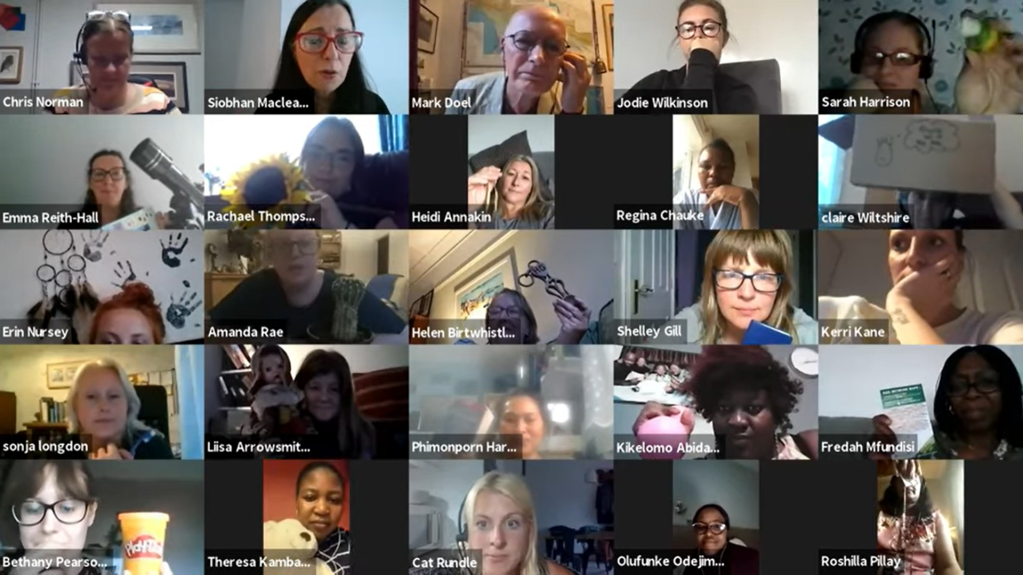
At the end of the webinar we switched on cameras and many people held up the objects that they felt represented social work
I am a recent MA Social Work graduate. I chose a career in Social Work after becoming a mother and realising how difficult it can be raising a child. The African proverb “it takes a village to raise a child” became abundantly clear. I realised not everyone is lucky to have a ‘village’ and I wanted to become part of a profession which symbolises a ‘village’. I recognised how living in a society riddled with inequality, racism and austerity can be challenging for disadvantaged children and families.
I want to be an advocate for disadvantaged children and families, to recognise and support their strengths. My passion lies in bringing about hopefulness, particularly to racially minoritized communities who often face racism, oppression and disempowerment within a society which is supposed to accept and support them.
I chose thisBridge Imagebecause …
… this symbolic image resonates with me, as I see the bridge as representing understanding, guidance, hope and empowerment. This image captures the journey for services users and social workers. The gap embodies the challenges and barriers faced by service users. They get on this bridge seeking to reach the other side, a new start from feeling defeated and to seek hope. Social work acts as the vessel that moves service users from one side to the other. It supports and guides them, but it’s important to note that the bridge is not mystical, there may very well be other ‘gaps’ services users face in their journey. In time, and with the guidance and support of social workers, service users make it to the other side.
Bridges do not end suddenly, they transition smoothly into a different path, this represents hope, resilience and empowerment. Our role is to support people to navigate through the cultural, financial and class barriers.
This image perfectly encapsulates the values and ethics of social justice, equality, human rights, integrity, compassion, helpfulness and empowerment espoused by the profession.



























 social work in 40 objects