String

G E O R G I N A

I N G O E

I am currently studying my social work degree and have successfully passed my 1st year. I have always had a passion for working with people and wanting to help. 

My mother was brought up within the care system and has been my role model for wanting to help others improve their lives. I want to help people to see that their past experiences may define who they are but it does not need to define their future.

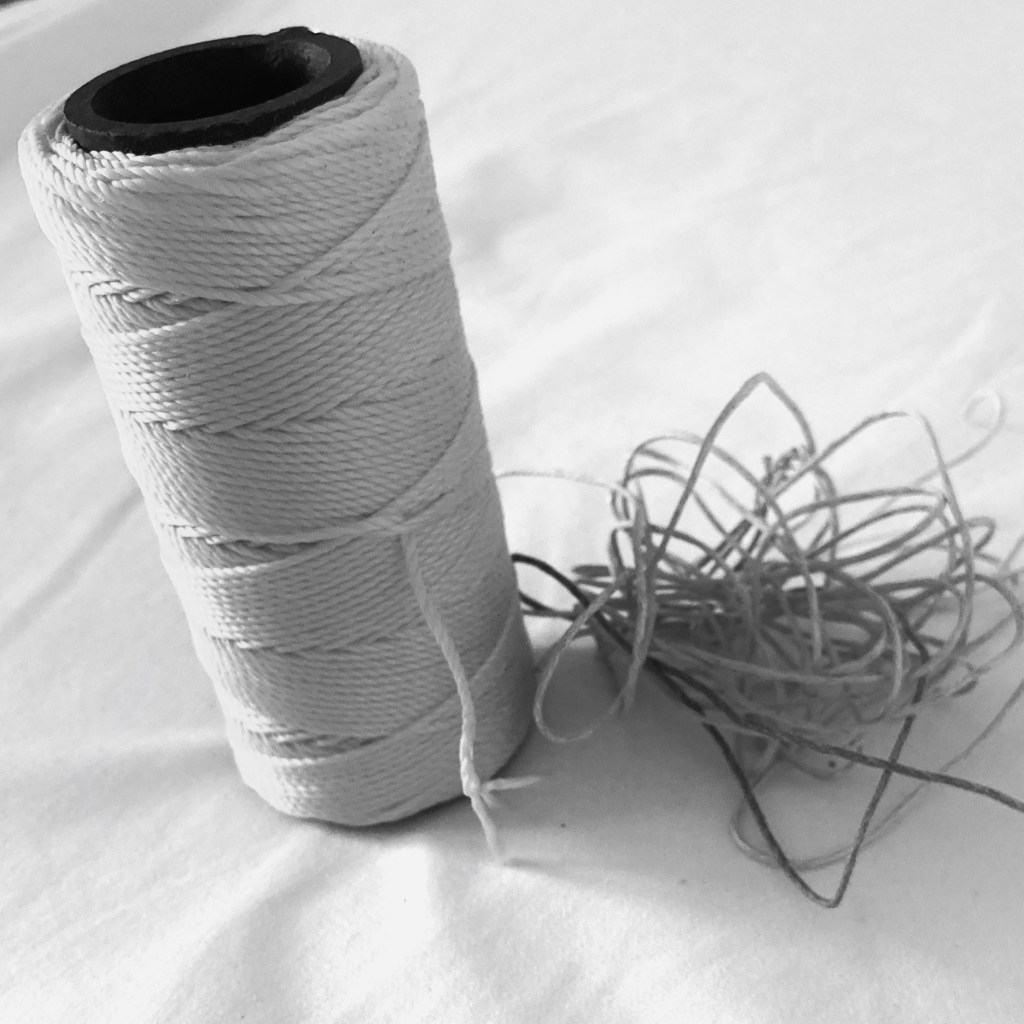
My 1st year of university highlighted the importance of relationships and for that reason the object I have chosen is STRING

I chose  String because …

… I feel it can represent people, the impact of life experience and relationships. All of which run throughout social work.

String is made of smaller pieces of thread that are intertwined. These smaller pieces would be what makes people who they are and reflect their life experiences. String also comes in different sizes, lengths and colours and therefore represents how we are all different.

Play doh

B E T H A N Y

P E A R S O N

I’m a newly qualified social worker, having only recently graduated from Teesside University and about to embark on my first social work job in North Yorkshire (England) in children’s safeguarding. Before becoming a social worker, I faced my own challenges as a teenager having chronic pain, an eating disorder and using self-harm as a way to escape. Through these experiences I was drawn to the profession, as often the social workers I met were the most compassionate and empathetic. However, I’ve also learnt from my poor experiences of services which has driven my passion to be different and more creative, as often I didn’t want to change or talk to people because of the way they approached me and the ‘process-orientated lingo’. Overcoming what I did inspired me to want to support other young people, to help them fulfil their wishes and dreams or just be there; that person who hears their story. 

My relationship with social work has grown and been nurtured by those I have met and the connections I have made. I’m incredibly driven by building and promoting more positive relationships, to be sensitive in my practice to all aspects of identity that make up a person. Being more trauma-focused in a world that has growing poverty and division, I feel requires a creative and innovative approach whilst also advocating for social justice. I am passionate about instilling this in all that I do, thinking outside the box to work with families and communities for better outcomes. To unravel their stories and help them shine, we must be brave and challenge structural discrimination and oppression. We must be the change; we must be colourful, and we must support safer and happier futures in a more relational and systemic way. 

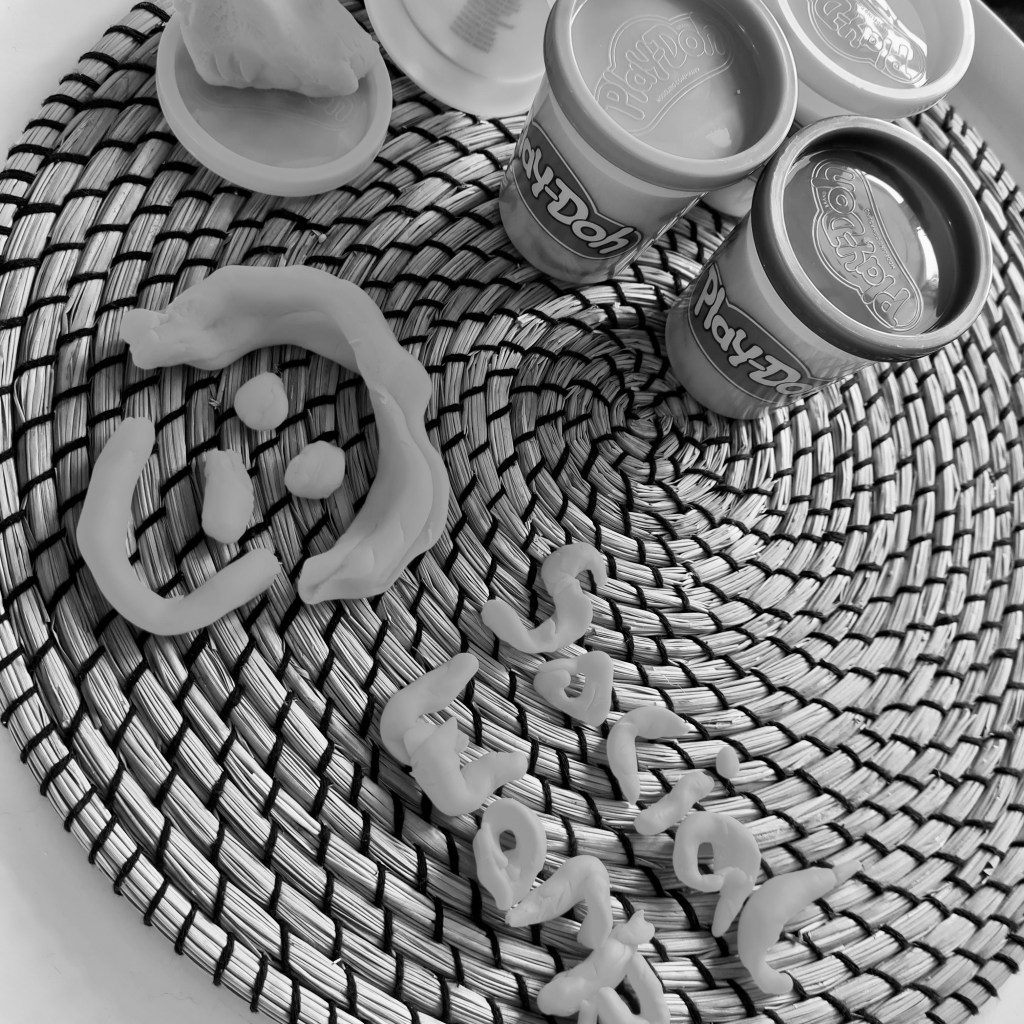
I chose Play Doh because …

… it reminds me of social work: it’s colourful; it comes in a variety of different shapes and sizes; it’s diverse, like the profession and the families we work with. Additionally, when carefully nurtured Play Doh can become anything, with a little determination and creativity. It can also always bounce back if it becomes out of shape with just a little support. In this way it represents the journey of social workers, their resilience and innovation but also symbolises change with children and adults, a shared and self-empowered activity. I feel this also demonstrates my motivation to become a social worker, my own plasticity when I was growing up. I also have fond memories of Play Doh, of Saturday mornings with my dad and as a calming activity when I was a teenager. All of which I’ve brought forward into social work with me. 

Whereby, it forms a part of my direct work toolbox, it helps me build relationships and find new ways of understanding children, that can also be very fun and calming. Whether we are simply fiddling with a bit of colourful Play Doh to keep our minds busy whilst we talk over difficult things or whether we build figures and animals that represents very important people in our lives. Play Doh opens up our imagination as we can create whatever we like, and sometimes it’s easier to visualise and show rather than talk and write. I have found through doing activities with Play Doh children seem to feel safer and have asked me to come back to see them again. Building trust with something as simple as Play Doh has meant a better relationship, a better child-led assessment and most importantly, a better experience for the child. 

A creative object like Play Doh is important to me as it challenges the process-orientated aspects of social work, the scariness of speaking to a stranger about your life. I’m hoping children and families feel less worried about me visiting, and hopefully we can build better connections through creating with Play Doh.

This Candle

K E R R Y

H E W A R T


My journey with social work commenced aged 18 months when I was removed from my mother’s care. I don’t remember this time and only have the story that I was told – files were lost and memories gone. My story was black …… darkness. I knew I had to create my own story and social work has led me to help others understand their story. 

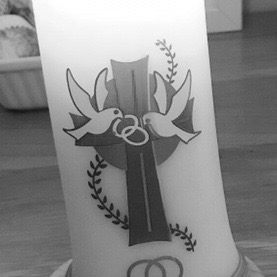
I chose This Candle because …

… it is my wedding candle. A candle symbolizes light in life’s darkness …… illlumination. This candle, my candle, brought light to my life through the support of another, and, hopefully, through social work I can work with others to bring light to their darkness.

Pens

S U R B H I

R A W AT

I am an emergency management professional from India. In 2014, I moved to New Zealand to gain tertiary level qualification to complement my work experience. Earned professional credentials from Auckland University of Technology (AUT) enhanced my professional skills in the two interconnected areas of emergency management and emergency psychosocial health. While working as a tutor and clinical supervisor in one of the Health colleges in New Zealand, I learnt about an emerging field of social work and its correlation with emergency health management. Later, my visits to social care settings and social work orations further enhanced my interest in social work. That’s when I recognized my passion to help people. I always knew that I had that urge to question, explore and understand in- depth needs and challenges of vulnerable people. So far, this passion has helped me to bring a meaningful and sustainable improvements in their lives and I continue to work on it.

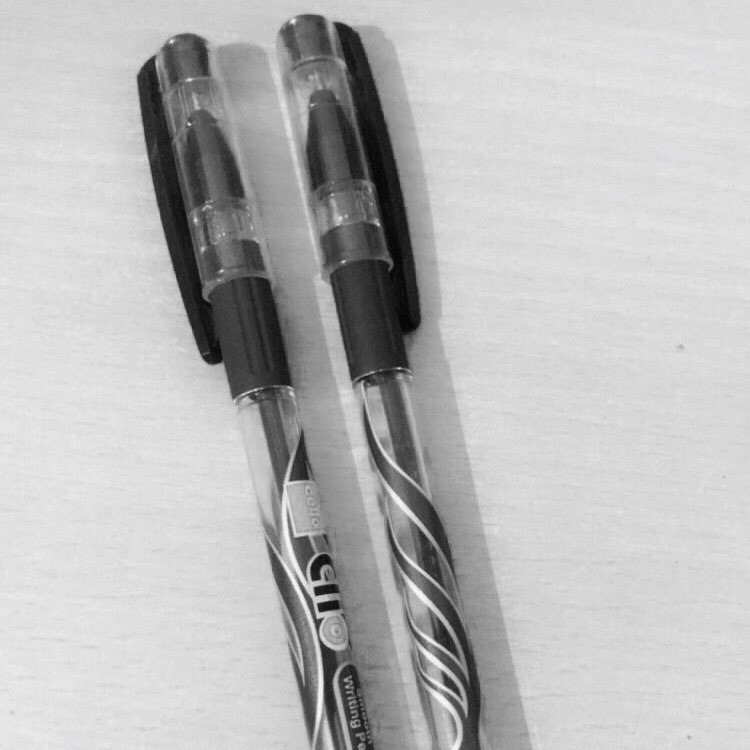
I chose Pens because …

… they represent social work to me as they are always with me. They constantly remind me of the power and magic of exploring social work. Whenever I am struggling, I pen down my thoughts and reflect on them. This helps me to think constructively and overcome issues. When I am supporting people, I use my pens to scribble notes and information important to clients. Later, I use pens to create mind maps to think creatively on ways to support the clients. 

Dreamcatcher

E R I N

N U R S EY

I have grown up in a family where I have been given everything that I wanted and needed. I love spending time with them and we are all very close. I thought that every family was the same, until I started to note indifferences in the way some of my peers lived or whom cared for them. One friend, who I will refer to as A, was fostered long term by an older couple. I became interested in his life and the reasons for him living with them, perhaps at times being ‘too nosy’ or ‘prying’ too much. He had little to no attachment with his carers, and spent most of the time out of the home and smoking cannabis.

A  told me he had no dreams for the future, and wished to just move out at 16 and get his own flat. This made me question whether he felt he had a sense of identity, and made me think about what control I could have in situations like this in the future. I became interested in people, and interested in how families function and how children’s experiences can impact on their future life experiences. I decided that I needed to do oscial work to help to empower individuals and families, whilst helping them to set goals and achieve their dreams. 

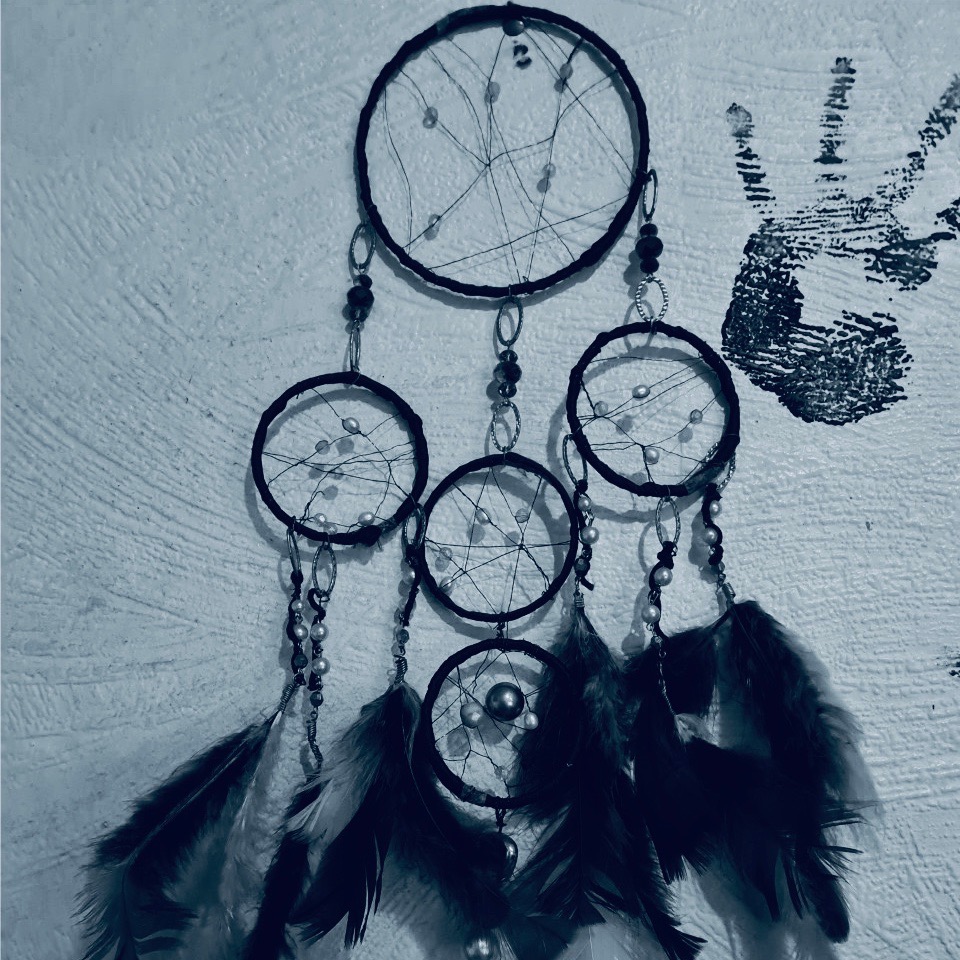
I chose Dreamcatcher because …

… I hope to capture people’s dreams in my practice, and I think that social work can help to make people’s dreams come true. I often find people are empowered by their support networks, family and friends and if you help them to focus on their dreams we can help to empower them in being the experts that they are in their own experiences. I chose a Dreamcatcher as my object, because everything is connected and Dreamcatchers are something that I love.  A Dreamcatcher makes me feel warm inside, as does social work practice. This has been on my wall since I was a teenager, when I knew that my role would always be to work with people.  

Connections are an integral part of social work practice, and dreams are something that we should help people to achieve no matter their circumstances. The circles within the Dreamcatcher represent the links and connections that we can create to support people. The big circle represents the family or individual that you are working with, and the small circles represent the services, their support network and family that aim to support them. The strings are the paths that you take to get there, and the beads could represent bumps along the way or those within the network supporting them. The feathers represent hope and freedom, and the individual or family being able to fly high and dream big no matter their circumstances.

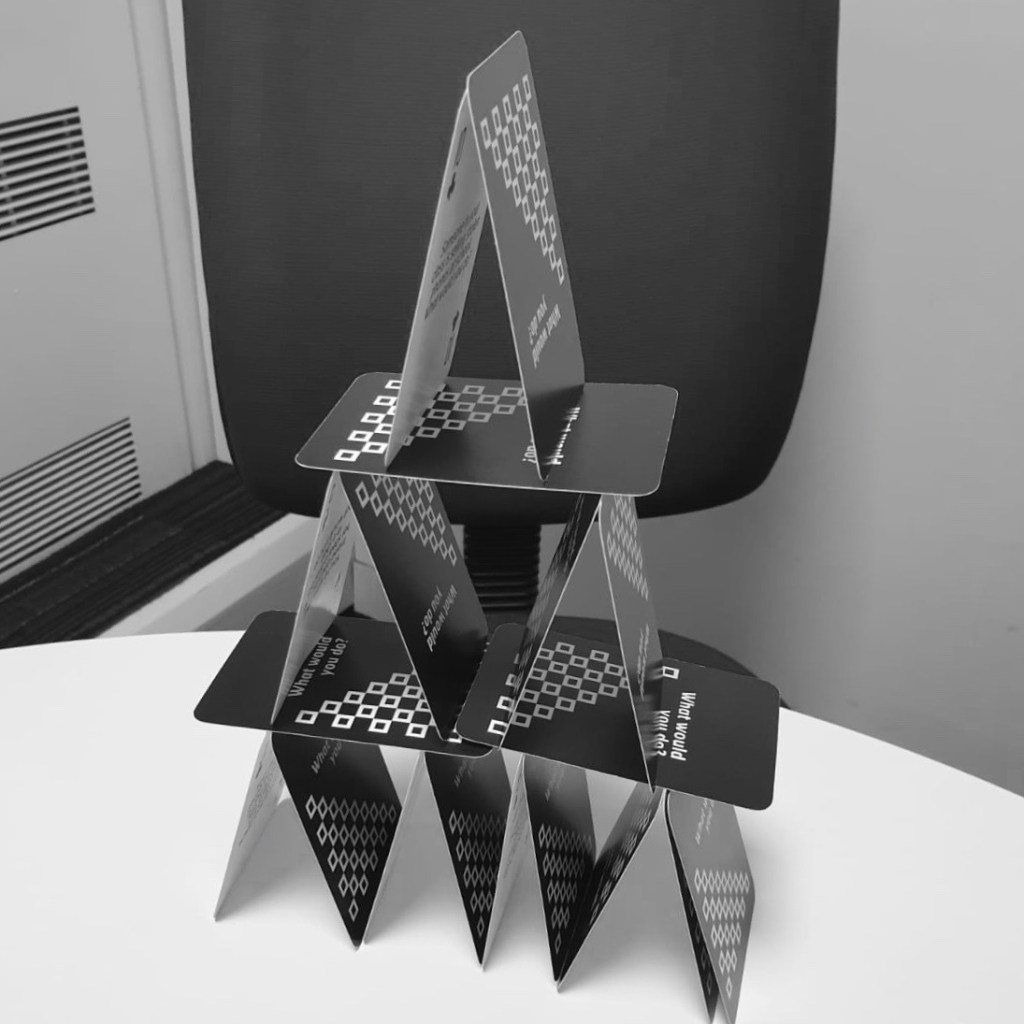
Pyramid of Cards

A V A

J A M E S

I am a Newly Qualified Social Worker in England who prior to my studies had found a passion for helping others. Living in a diverse world where there is poverty, oppression and discrimination, families continue to have unmet needs. 

Becoming a social worker has been rewarding as I have played a positive role in providing families with support. Unfortunately it has also been disheartening due to barriers in social work practice. 

Partnership working has supported social work intervention by providing high quality joint care.

I chose Pyramid of Playing Cards because …

You’ll need more than one card to successfully play a game, or in my case build a house of cards. 

The lower section of the pyramid represents the family and each card above that represents the support to help them reach self-actualisation. 

In social work there are limitations that can hinder the method of intervention, such as lack of funding, non-engagement from families and lack of resources and services.  

Each limitation leads to unmet needs and therefore limits the families’ growth and development.

Even with the breakdown of support the family will remain a part of the pyramid, at its fundamental base. As the lead professional, it is the role of the social worker to work in partnership with the family – to help put the cards in place – and other professionals to continue to support the family to reach self-actualisation.

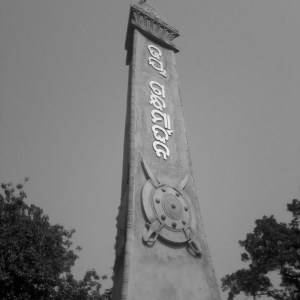
Martyrs’ Monument

T A R U N

B A N A R J I

S A G A R I K A

B A N A R J I

We are social work activists living in the Manicktala neighbourhood of Kolkata (Calcutta), India. We work with groups of young people and children in the neighbourhoods and in rural villages in West Bengal. We have developed a wide variety of programmes that include scientific modelling, dance, mime and yoga, song and drama, artwork, football, and campaigns for women’s rights and environmental concerns. Our work is part of a broader movement – Bijñāna Bhavna(science thinking). We catch young people at risk of falling out of school or getting into trouble and help them towards a trade and self-employment. We are green socialists and we believe that social work must have the raising of political awareness at its heart. 

We chose the Martyrs’ Monument at Gandhamarden Hill because …

… it represents, for us, the importance of social workers fighting for social and economic justice and working directly alongside people to achieve this.

Gandhamardan Hill is in the state of Odisha (Orissa) in India, part of a range of mountains that spreads through three districts – Bargarh, Balangir and Noapara. In the southern part of the hills is Harishankar, with a waterfall, and the northern part of the hills is Nursingnath with Kapilbhara Fountain. There are 22 naturally occurring waterfalls and 500 species of medicinal plants, of which 42 are very rare. These plants are in dense forest and jungle where 50,000 tribal people live. These tribes people are the Kondhs, the Oraon and Obadas.

From the epic story of Ramayana we find one story that Hanuman brought this hill from the Himalayas to save the life of Lakshman by using bisaya koroherbs – life-saving herbs found here in this district. 

In 1983 the Government of India and State of Odisha decided to explore the region for bauxite ore. The BALCO company starting blasting dynamite at the mouth of the sacred Kapildhara waterfall and immediately the waters stopped flowing. 

We took part in the movement to stop the stripping of the mountainside and the desecration of the waterfalls. Many people were shot dead and they have become martyrs to the struggle. Ultimately the Government backed away and mining was discontinued in this particular location. But in recent years there is again pressure to resume mining activity. 

Social work activists are always needed.

Mirror

R O S I E

K A V A N A G H

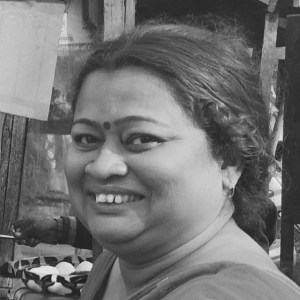
I was 19 when I chose a career in Social Work, coming from a family of nurses, the concept of caring for people was in my blood! I have predominately worked with adults and now work as a full-time Practice Educator in the voluntary sector.

I chose Mirror because…

In my direct work with vulnerable adults I have been committed to empowering people, I have encouraged service users to ‘look in the mirror’ for them to identify their existing strengths/skills and to look beyond an illness or diagnosis they have been labelled with.

The mirror symbolises ‘reflection’ to me, I have continued to develop my critical reflection skills and spend a lot of time evaluating my practice and searching for new, more creative/effective ways to support students. I have explored my identity in great depth and support students to do the same, to help them consider any values conflicts and learn about oppression and discrimination.  

I love teaching students about reflection, I encourage my students to use the ‘mirror’ to consider what type of Social Worker they want to be and use reflection as a tool to learn about themselves and improve their practice!

black bin bags

B E R Y L

S E A M A N

My mother had always “done charitable works” and my father was a JP (Justice of the Peace, a magistrate) in Liverpool in the 1950’s. In my teens the new universities were offering sociology as a degree course and this seemed the obvious course to do but in fact I ended up at Nottingham University, reading Social Administration which meant I only had to do a one year Post-Graduate Diploma to become a fully qualified social worker – at the age of 22!

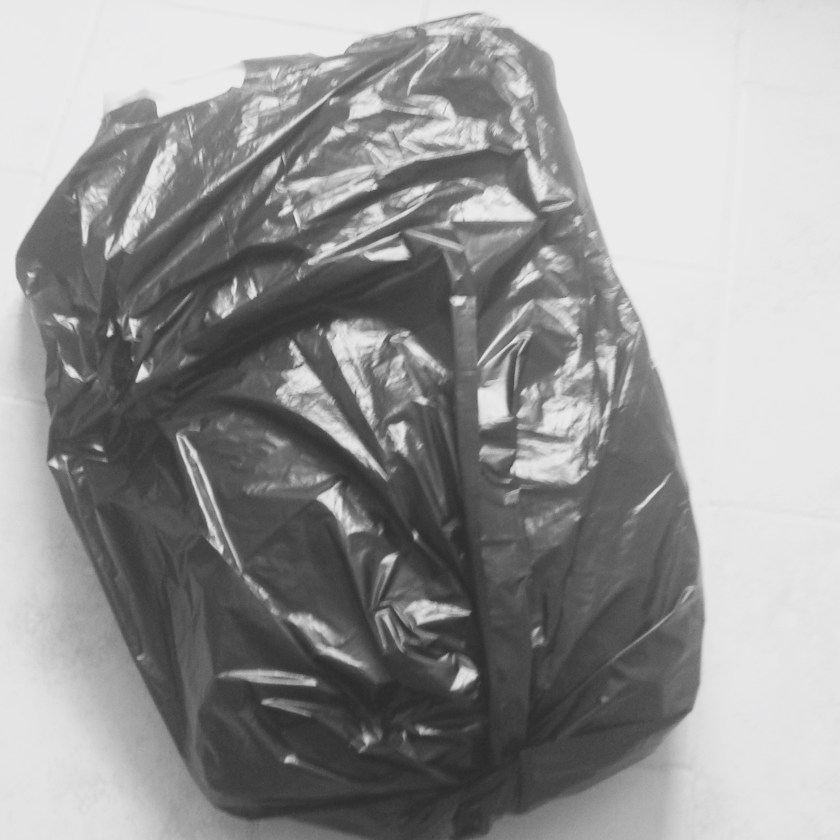
I chose Black bin bags because …

In 1974 I was working for Sheffield Family and Community Services (Social Services) with a generic case load (in other words, working with all client groups in a neighbourhood ‘patch’). I had a young black teenager under supervision to me and in residential care and when he turned 16 I moved him from the Children’s home to a bedsit in Hyde Park Flats (a big council estate near the centre of Sheffield – now private flats!)

When I collected him from the Home all his belongings were in a black bin liner. I had a few items to help him set up his new flat but it was sparsely furnished and I remember leaving him there all alone with his bin liner.

I look back now and shudder at how naïve I was to think I gave him anything approaching adequate support and the black bin liner sums this up. I do remember later there was a charity set up to provide suitcases for Care Leavers.

trove

D E B B I E     W A T S O N

My background is as a school teacher and a sociologist. However, as a childhood academic in a department of social work and social policy, my work has increasingly focused on identity and wellbeing for children in care and adopted children. I passionately believe that academic understandings of narrative, identity and the role of tangible objects in memory work can be used to improve the outcomes for children and enable them to have a better sense of their story and their reasons for being in the care system, and that this has potential for lifelong positive mental health. Embedding objects within life story work offers massive potential and agency for children.

I chose trove because …

It is itself an object that enables children to cherish their objects and to build understandings of their care journey through these loved items.

Social workers focus on constructing a coherent narrative for children in the care system and this often takes the form of a life storybook (particularly for permanently placed children). But, through my research with adopted children and those in care, adopters, foster carers and social workers, I have been struck by how important tangible objects also are in enabling children to fill gaps in biographical memory and retain connections with past carers and family members.

This feels like a resource that we should be utilising and, importantly, places the child in the centre of the story making about their own life. But all too often children’s belongings become lost, displaced, damaged and without reminders from carers, their stories and connections to the child’s biography become lost. I have also been struck by the many accounts I have heard of children arriving in new placements with bin bags and scruffy cardboard boxes of ‘stuff’ and carers having to make sense of precious items. Things are important for all humans and connect us to relationships and events in our past. Surely this is crucial to preserve for the most vulnerable children in society?

trove has been co-designed and tested with many children and young people. It is a combination of a beautifully designed comforting storage bag, which is soft and enables things to be stored safely, and a bespoke multi-media storying app that is used on a mobile phone integrated within the fabric of the bag. Children can attach lots of different stories to loved objects using Near-Field communication technologies available on the phone. Working with creative designer Chloe Meineck, colleagues in computing science at Bristol University and three social work partners, we have now developed a prototype that we hope we can get into manufacture so that children who most need this tool are able to engage with.

trove represents this journey for me and I feel very privileged to have worked alongside amazing children and young people who have helped to design it.