
Guitar

    D A N A   L E E M A N

Dana Leeman   107 Guitar

When I was an undergraduate psychology major, I was continually struck by the complexity of my professor’s research and their obvious intellectual gifts, but also by their interpersonal skills. I often found them to be lacking in warmth and openness, and I couldn’t see myself asking any of them for help if I was in emotional pain, let alone share anything deeply personal with them. This caused a bit of a crisis for me as I contemplated my future. And then I took a course on Family Systems Therapy taught by a social worker. She was warm, engaging and came directly to class after seeing clients, so her stories were real and in the moment. Most importantly, she was the first instructor to talk about the impact of racism, oppression and poverty on clients, to emphasize that this was as much our concern as social workers as their internal experience. A deep chord was struck …


 I chose Guitar because …

 … it is a metaphor for social work practice. There are multiple ways to play a G chord, for example. It depends on the string or how high or low you form the chord on the guitar. Two G chords can sound quite different depending on how you accent your strumming or set up an amplifier, or play acoustically. Some G chords are clean and clear while others can have lots of distortion. Both are G chords, but can sound markedly different. No two G chords have to have the same tone or voice.

The same is true of social work. Depending on the context, our approach, resources and training, we help clients not only find their own voices, but create new melodies out of life narratives. This is hard work that requires intentionality, continued study, and many hours of practice!


Yellow star

    J O   F I N C H

106 Jo Finch    106 Yellow star

It was inevitable I would become a social worker as there was no other profession where I could ‘live’ my politics. I grew up in a single parent family at a time when there was stigma and shame about living in a so- called ‘broken family’. I knew from an early age, my family was far from broken and I was acutely aware of the neighbours’ (particularly men’s) condescending attitudes towards my mum, constantly offering her unasked for ‘advice’. My brother and I felt under scrutiny and any normal childhood naughtiness was viewed as proof of our inevitable slide towards delinquency due to living in a single parent family.

The beginnings of my feminist and social justice leanings were clearly sown at this time and came to the fore when I attended a radical (now a dirty word) comprehensive school in Crawley, West Sussex (southern England). Our curriculum was deliberately political – we learnt about the Bhopal disaster, apartheid, the holocaust, poverty and inequality. We were encouraged to redirect our teenage angst and be angry instead at such global issues and injustices. We were encouraged to have a voice and stand up for what you believe in. It thus seems a short journey from GSCE humanities, to A level sociology, a politics degree, working in a residential unit for adults with learning disabilities recently discharged from long term institutions, and then undertaking social work training at the London School of Economics.


The Yellow star is a symbol of the holocaust.

I chose Yellow star because …

… it serves as a stark reminder of the risk of how ‘caring’ professions, including social work, can become caught up in ideological frameworks that serve only to breach fundamental human rights. Every year with the new intake of fresh and hopeful MA social work students, I present a teaching session on the history of social work in the UK. I am reminded every year that the profession’s roots are deeply uncomfortable, namely a Victorian ideological and moralising discourse of who is deemed deserving and undeserving, and the influence of the Eugenics movement, with concerns about ‘lunatics’ and the ‘feeble-minded’ breeding. Indeed, eugenics was influential in social work practice in the USA in the 19th and 20th centuries, with a focus on ‘mental and social hygiene’; the forced sterilisation of those with learning disabilities in the USA was a common practice.

The Eugenics movement, reached its evil zenith in Nazi Germany. For example, social workers were required (alongside other professionals like social pedagogues) to submit documents to court detailing ‘concerns’ they had about children and young people, namely those seen as delinquent, disabled, mentally ill or not racially pure. Social workers and other caring professions also worked in institutions, where the killing of those with disabilities, mental ill health and those of so-called ‘impure ethnicity’ was commonplace. It would be easy to think such practice were in the past, but in Australia, aborigine children as late as 1970 were forcibly removed from their homes and placed with white families.

This is the dark side of social work, a professional that can be seen as nothing more than agents of the state, removing children from ‘feral families’, for example, and influenced unconsciously by social Darwinism. The care vs control dilemma in still omnipresent.

Our ultimate goal has to aim at challenging social injustice and inequality, upholding human rights and being advocates for those who the system has conspired to make lose their voices. Most importantly, we need to constantly worry whether our practices of today will be the scandals of the future.

Budget

   D A V I D   W H I T I N G

100D David Whiting   105 Budget

In 1971, I was elected to Southwark Council (London) for what I had been confident was an unwinnable ward. At the time I worked in the marketing department of IPC Business Press. My local government experience led me to identify a gap in the market for a serious professional review to be sustained by recruitment advertising revenue – of which there was likely to be a lot due to the expansion of social work at the time. This work led to the launch of Community Care, which succeeded because we managed to convince IPC that well targeted editorial investment would distinguish it from other recruitment media.

Local authority children’s and welfare services were reorganised into a generic service through the Local Authority Social Services Act 1970, which was based on the proposals of the Seebohm Report of 1968. When selected as a Council candidate, I was handed a copy of the Labour Party Local Government Handbook for England & Wales. Mine was the 1969 edition. I still have my copy, and reading it is to travel to a far distant country. Twelve pages out of 256 cover all of health, children’s services and welfare (adult social services were administered under the National Assistance Act 1947).

The structure of services was very much the same as existed in 1947 – for example, there was no integrated command for the health service which was divided between hospitals owned by the Department of Health; general practitioner, dental services and the like which were organised around local executive bodies; and local authorities who were responsible for maternity, ambulance, health visiting and public health (the last now returned to local authorities after 40 years with the NHS). The term ‘social worker’ is not used anywhere in this document.


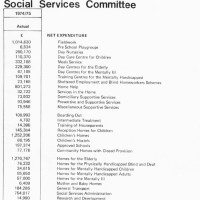
I chose this Budget (London Borough of Southwark Financial Review 1975-76) because …

… The Social Services Committee Budget for 1975-76 reflects the transition to the new world. I suppose a modern reader will be most surprised that social services for a population of close to a quarter of a million in Southwark were provided for only £9.6 million (£70-75 million in today’s money). Southwark now spends two and a half times that. So much for Seebohm’s assertion ‘that these changes have no financial implications’.

Looking at the composition of the budget, there is a mix of the old and the new. The first line of the budget announces that £1.3million was spent on (generic) fieldwork – the new Seebohm ‘big idea’. Further down, sums listed for the traditional welfare services. More is spent on each of homes for children and homes for the elderly than on fieldwork. Domiciliary services in total also take a fair chunk of the money. Sheltered employment, day and training centres still loom large. It is notable that fieldwork comes in under-budget – there were not enough social workers to go round which is one reason there was so much recruitment advertising revenue available to the alert publisher.


Here are a few musings on this document:

  1. Reorganisations.    The reorganisations of health and social services in the early 1970s represent the beginning of an accelerating trend to over-frequent reorganisations of public services in the UK. Politicians have few means to improve service delivery and have increasingly resorted to reorganisation out of frustration at their inability to make much of a difference.
  1. How to provide democratic oversight?  How were local authority members meant to provide democratic oversight of this new service whose ethos and role must have seemed strange to many of them? Southwark Council members were mostly 60 years old and more. The older male councillors sat on the Highways and Works Committee, the older women on the Social Services Committee. Committee members were expected to make visits to residential homes and day centres and from time to time   would set off together by coach to make their inspections, ending usually with a lunch at Cobs Corner restaurant. This may or may not have been effective. It is however hard to see how such an approach could be applied to a busy area office. There was little regard to how local authorities could make a contribution to the development of this new (and to many elected members mysterious) service.
  1. A young, committed but inexperienced workforce.    The Seebohm reorganisation was implemented with little regard to workforce planning and the financial implications. A result was a very young workforce as authorities scrabbled to fill posts with newly qualified staff. Most field social workers were in their mid-20s, and team leaders were typically around 30. The workface was committed and energetic, but did not, on the whole, really understand the relationship between the services they provided and the local authorities which administered them.
  1. A golden era?     Despite this, it was in some ways the best of times for English and Welsh social work. There was a real hope that social work might be effective in dealing with isolation and exclusion. Budgets were expanding, and there was a range of back-up services not now available. In 1975-76, for example, there were around 2,000 community children’s homes in Great Britain. These are now largely gone as a result of the ill-considered strategy of closing homes and replacing them in all but the most difficult cases with foster care – a ‘sudden irradiation of intelligence’ to quote Dr Johnson which does not seem to have been informed by a realistic assessment of how far foster care could stretch, Finally, the uncritical and poorly implemented privatisations of later decades had not really got under way, and, although new and inexperienced, the workforce was largely directly employed in established, permanent posts. Consultants and agency staff were not much in evidence.

Kennedy report

R O B B I E   G I L L I G A N

104 Robbie Gilligan 1592 Club – Version 2    104 Kennedy report

My path to social work had an unlikely beginning in a Latin class. In a rare moment of diversion, our teacher invited us to visit a local inner city youth club which was supported by former and current students from the school. I went along, liked what I found and became very involved in weekly activities and summer camps. During one of those camps, I recall clearly a moment when I said to myself ‘this is what I want to do’. I signed up for a social work degree at Trinity College Dublin – and have never regretted the decision.


I chose the Kennedy report because …

… it[i] was my first real exposure to the policy issues surrounding children in state care, an issue that later proved to be the dominant thread in my social work career, as a practitioner, educator and researcher. I still remember as a young university student in Ireland attending a public meeting pushing for its implementation in the early 1970s. Visits during my social work course to a reformatory and an industrial school further convinced me of the need for major reform of these archaic and oppressive systems. On graduation, I started work as a social worker. This brought me into contact with actual children in care, with more of the institutions that were the focus of Kennedy, and with fostering. And it also brought me into the court room of the formidable Judge Eileen Kennedy who had chaired the committee, and who in her day job presided over the Dublin Metropolitan Children’s Court.

Over forty years later, the system for children in care in Ireland has been transformed. Social workers like me were hired in the 1970s to provide a new child care social work service – part of the policy response to Kennedy. These social workers were inspired by their own professional instincts and training to find new foster families as an alternative to placement in institutions. They also helped establish foster care practice on a proper professional footing. Unimaginable back in the 1970s, Ireland now has one of the highest rates of family placement for children in care globally[ii]. The Kennedy report reminds me of the key part played by social workers in the deinstitutionalisation of children’s services in Ireland, and of my own very small share in that same process, as a social worker and foster carer.


[i] Committee on Reformatory and Industrial Schools Systems (Kennedy, E., Chair) (1970). Report. Dublin: Stationery Office.

[ii] Thoburn, J. (2010) International Perspectives on Foster Care in, editor(s)Elizabeth Fernandez and Richard P. Barth, How Does Foster Care Work? International Evidence on Outcomes, London: Jessica Kingsley Publishers, pp. 29-43.


Hammer

   N I G E L   P A R T O N

103 Nigel Parton     100 Hammer

I qualified as a social worker over forty years ago and worked as a practitioner in a local authority social services department after graduation. However for over thirty five years, apart from one year at the University of Keele, I have worked as a lecturer and researcher at the University of Huddersfield. I now work on a (very) part time basis. While my main commitment has been to qualifying and post-qualifying social work courses I have also taught and supervised PhD students with a range of health and social science backgrounds. My main interests have been on child welfare and child protection and the theory and practice of social work more generally.


I chose Hammer because …

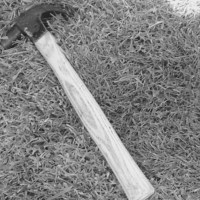
… while I have been distant from direct social work practice for many years virtually all of my close friends have been social workers at some point and certainly my very closest friend of well over forty years is a social worker, and this story and Hammer relates to her. When she was in her late twenties, and she looked much younger, she was a social worker on a social services department’s Emergency Duty Team. There was no office base and she worked directly from home. The role involved responding to calls out of office hours, of an evening and at weekends, where it seemed there was an emergency which could not wait until the day teams were next available. Many of the calls were from hospitals, foster carers and the police and typically involved mental health concerns, elderly people, or child care problems.

This particular call came from a foster carer who said that a man who ‘lived up the valley’ was refusing to bring his young child back after a contact weekend and was demanding to speak to a social worker. My friend spoke to him on the phone and, while he seemed in a relaxed mood, was not prepared to allow the child to return to the foster carers. She arranged to visit and called the police asking them to be available nearby. She gained entry and spoke to the man, but quite out of the blue he produced a hammer and refused to let her or the child out of the house and turned increasingly aggressive. This went on for some time but she stayed calm and talked to him to the point that no only did he put the hammer away but agreed to let both her and the child out of the house. The police had been nearby all the time but did not want to intervene.

Soon after she got home and wrote up her notes she became very shivery and a temperature took hold – probably delayed shock – which meant she had to rest up for a couple of days – but she was back on duty again the following weekend.


I have often felt that bravery is a much underestimated quality required to be a social worker. Social workers are required to go into situations which require considerable guts and then respond by simply relying on their own wits. Nor is bravery only concerned with putting one’s body on the line; much of it is also emotional and intellectual – going to places that others fear to tread. This doesn’t mean being reckless but it does require a strength and a humility which is not always given the profile that is required for many of the challenges which social workers face on a regular basis.

Trypillian dialectic spiral

E U G E N I U   R O T A R I

102 Eugeniu Rotari   102 Pot

I came to social work out of curiosity. While having a background in psychology I joined a social work related summer school program and just got into it. I ended up doing research in social work while still being a student at the psychology department, and after I got my degree, I came into social work. Right now I’m a student at the MSW Program at ULIM in Moldova, while working with Project Casa Mare for the professionalization, legitimization and education of social workers in Moldova. I am also active as the Executive Secretary of the National Association of Social Workers in Moldova.


I chose Trypillian Dialectic Spiral (as an Eternal Symbol of Conflict and Creative Synthesis) because …

it represents one of the most important aspects in social work: conflict.

Trypillian culture flourished 6,000 years ago and was located in the area presently known as Moldova and adjacent regions. It was highly sophisticated and it is preserved through a vast legacy of artefacts – Objects – particularly pottery of perfect shape and intricate design. Spiral is the symbol that is ubiquitous on Trypillian pottery. We can only speculate about the meaning of spiral to the ancient Trypilians, but to the modern person, spiral symbolizes (among other things) the dialectic process, the conflictual progression from the status quo thesis through the opposing antithesis to a creative synthesis. Spiral can be seen as the symbol of dialectic social work that upholds the notion that social workers are experts on conflict and constructive transcendence of social and individual troubles to the higher plane of awareness and existence.

The Trypillian culture is becoming a way of achieving an integration of social work with economic development, through a Social Wellness regional project in Moldova. This project will provide sustainable economic and social ways to improve social wellbeing by infusing the project with elements of the Trypillian culture. The common cultural background will be represented by the Trypillian arts, history and traditions; these will become a source for the social and economic development of the community where the regional social enterprise project is based.

Crib

    G E R R Y   H E E R Y

Gerry Heery     100A Crib

Growing up in Belfast during the troubled 1960s and 70s, I knew nothing about social work, until my final year at school when I made a spur of the moment decision which ultimately decided my life’s work. A charity group visited my school to ask for volunteers to spend the summer helping ‘disadvantaged people’. That led to an eventful period building and running an adventure playground with children and young people in a socially deprived estate on the outskirts of Dundee. I was accommodated in a community residential unit providing support for adults with mental health difficulties. Both these experiences, the work and the accommodation, led to my first contact with social workers; as a result, a few weeks before I was due to start an Economics degree, I switched to Social Administration. Then I got up the courage to let my parents know!


I chose Crib because …

… it was made for me by a young person, Peter, I worked with early in my social work career. It is a plain and basic structure and Peter took great pride in his creation. It has stood the test of time, and the more I thought about it the more connections I could make with themes and memories from my life in social work.

Context is everything and growing up as a member of the Nationalist community in Northern Ireland[1] during a period of communal violence has surely influenced my practice, some aspects of which I may never fully understand. Peter made the crib for me at a time when I was living in an area which had been subject to several murders and attacks on peoples’ homes, as it was a border area between the two main communities. I had to leave my family home, which has since been demolished and in its place is a large 30 foot wall, with the misnomer of ‘peace wall’. It is now covered in attractive trees and various other plants, but the fact that the wall still stands 30 years later, shows that divisions and tensions still remain, despite the progress that has been made.

Like all social workers in N Ireland I had to find ways to work with all sections of our society in this period of conflict. I was privileged to work with some colleagues in imaginative and creative ways seeking to contribute to peace and reconciliation. Hopefully someday their stories will be told – perhaps via their own Objects? At the same time, for many of us, rightly or wrongly, often the safest approach through these times was, in the words of our famous poet Seamus Heaney – ‘Whatever you say, say nothing’!

Beginning my social work career in a residential setting helped me appreciate just how important was the quality of the relationship and connection that I could make with the young people. There was no avoiding this and it is something that is not forgotten. For instance, recently, I met someone I’d worked with 35 years ago; he shook my hand and told me all about his family and the stories of other young people we’d both known.

On another occasion I was making my way back to my car with my wife through a poorly lit part of Belfast. The troubles were still going on and, as on most nights, not a lot of people around. Suddenly a bottle landed and smashed into many small pieces just by us and a group of young men ran towards us swearing and shouting abusively. Then one of them shouted, “I fucking know him, he’s OK”, and the group moved off. I recognized him from the centre where I’d worked some years before: probably one of the most timely and welcome pieces of feedback I’ve ever received!

The occupants of the original crib, over 2000 years ago in Palestine, were soon to become refugees. Today we are striving to respond to the most catastrophic refugee crisis since the Second World War. Whilst the young person, Peter, who made the crib for me was not experiencing such adverse circumstances, he was nevertheless, like so many of the other young people who are taken into care, from a socially disadvantaged background. Many came from situations of great poverty, where generations of their families had not had access to employment as a result of structural discrimination in N Ireland.

Although the political situation has significantly improved, various disadvantages have continued to mark the lives of the large majority of people social workers work with. In an era of austerity, cut backs and foodbanks, there is greater inequality in the distribution of income, wealth and power than there was when I started my social work.

The nature of the social work job requires us to look after ourselves. I have a photograph of myself with Peter and two other young men I was working with. (I was their Probation Officer in West Belfast). I had known all three for several years. Within 10 years they were all dead. One took his own life, another was shot in a paramilitary feud and the third, Peter, who made me the crib, died as a result of alcohol. Social work often entails working with the misery, the traumas and the tragedies of other people. It is crucial that we recognize the impact of such events and find ways to look after ourselves, too. My religious faith, reflected in my choice of the crib and which was also relevant to my decision to come into social work, has been a source of strength and hope to me get through some very difficult periods. All social workers need to find their own kinds of support.

N Ireland has moved forward in the last 30 years and there is much hope for the future. Similarly, the centre where I began my career and where the young man made me the crib, has moved on. It now houses several separate therapeutic units, each catering for a much smaller number of young people, male and female. It also includes the regional facility for young people from other countries who have been trafficked, separated or abandoned.

For me, these early experiences of the conflict in N Ireland and my time in the residential setting, followed by periods within the Probation and Youth Justice agencies have allowed me to specialize in working with situations of conflict and violence within relationships, families and communities. And currently I am part of a project with young parents serving sentences in a Young Offenders Centre. It is an example of cooperation between the statutory, voluntary and not for profit sectors, and within which social work has a pivotal role. It is making a real difference to people’s lives. The fact that one of the parents is the son of one the young people I worked with many years ago highlights the fundamental aim of the project in seeking to prevent the adversities of one generation passing onto the next.


This wonderful example of practice suggests one final metaphor for the crib:

Each Christmas, Peter’s bare and black crib is transformed into a beautiful centre-piece for our home. It comes to life. There are times when social work can really make a difference and transform lives for the better.

[1] In N Ireland, there are two main communities – Nationalist which looks towards an all-Ireland state and Unionist which values the union with Britain. The majority of Nationalists, but by no means all, are Catholic and similarly with Unionists the majority are Protestant. Within both groupings there are those who have used physical force to further their political aims. In addition, sectarian attitudes and behaviours have been problematic.

House

R O B E R T A   M O T I E C I E N E

Roberta M   96 House

I came to social work in 2004. I finished BA, later MA of social work and at the moment I am a PhD in social work at Lapland University. My research focus is family social work. Before I was invited to come to teach at Vytautas Magnus University in Lithuania I was practitioner who worked with multiproblem families (in Lithuanian law called ‘social risk families’). It was exciting experience which changed my approach to social work and also it changed me as a person. During my maternity leave I understood that I want to deepen the knowledge and to create new knowledge about family social workers’ experiences in Lithuania.


I chose House because …

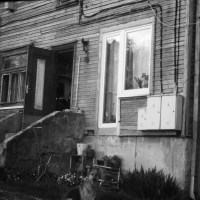
… it is realistic and not idealistic environment which I am exploring. In most cases family social work is done in poor home settings. In this picture I found my personal experience as a social worker, how to enter in a family house, how to create relationships, how to break barriers and to have a professional relationship and to work. If you will ask family social workers where they are working, they will answer to you “in clients’ home”. Sometimes, it became really very challenging to do this, because family members are not waiting near the doors and looking “where is my social worker?” – even if the door is open.

Jane Addams’ coat

V A D I M   M O L D O V A N

100D Vadim Moldovan – Version 2   95 Jane Addams Coat

I wandered into social work after emigrating from the Soviet Union to the United States, studying at Columbia University Business School, and driving a cab in New York for four years. Never looked back.

With the Master of Social Work degree worked for ten years as a psychiatric social worker. With the PhD in social work, joined faculty at York College of the City University of New York. Main professional focus at the present time – education, professionalization, and legitimization of social work in Moldova and other post-socialist countries.


I chose Jane Addams’ coat because …

… “Tolstoy, standing by clad in his peasant garb, listened gravely but, glancing distrustfully at the sleeves of my traveling gown which unfortunately at that season were monstrous in size, he took hold of an edge and pulling out one sleeve to an interminable breadth, said quite simply that ‘there was enough stuff on one arm to make a frock for a little girl,’ and asked me directly if I did not find ‘such a dress’ a ‘barrier to the people.” (Jane Addams, Twenty Years at Hull-House).

Jane Addams’ resplendent coat is a symbol of wealth and privilege. It stands in stark contrast with the poor person’s garb. The social worker who ministers to the poor from the position of power, material well-being, and authority does not empower but relegates the needy the secondary role in the relationship – that of an alms-taker, a charity case. Jane Addams’s coat also symbolizes the hypocrisy potential for the social worker who proclaims to uphold the values of social justice and yet lacks the self-awareness to recognize how her behavior subverts her message. This encounter with Tolstoy triggered a profound crisis in Jane Addams, a reorientation towards the more authentic and socially responsible social work practice.

Cross

V A L E R I E   R O Y

Valerie Roy   100 Cross

I have grown up in a Catholic family and one of my uncles was a missionary in South America. He was very devoted to his community, especially to poor families and to political prisoners. At 8 years old, I didn’t know anything about social work, but I sure wanted be a missionary too, in order to help people.


I chose Cross because …

… though it may be a delicate or controversial symbol, for me it shows similar complexities with social work. The image I chose to represent social work looks like a pendant I had at the time I knew my uncle. As I grew up, my religious beliefs have progressively given way to a secular commitment, but I always kept this motivation to serve others, including now in my current position as Professeure École de service social at Université Laval in Québec.

Serving others refers to a debate in Québec about the designation of social work itself, whether it should be called “service social” (social service) or “travail social” (social work). This debate brings back the religious roots of social work in Québec’s francophone context. At the time, the first forms of social work in Québec’s anglophone community were secular, while for the francophone community, they were carried by different Catholic organizations. I personally consider that the idea to “work with people”, which is an important value in social work, is better translated by the designation “travail social”; however, I have a personal and historical attachment to the designation “service social” because of these roots.

On the other side, the cross also symbolises for me a darker side of social work, namely the power social workers can have over people and the potential abuses of “acting in the name of” or “for the good of others”. Even if we “work with people” and even if we adopt a critical and reflexive practice, I do not think one can escape from these risks as we are all human beings. Therefore, ethics and regulation systems appear essential to me in order to protect people from our power and to ensure that we serve them without any personal or professional benefits.