J O C E L Y N
H E R N A N D E Z

I am a Licensed Clinical Social Worker with experience providing in-home family therapy earlier in my career, where I worked extensively with immigrant and Black, Indigenous and People of Color (BIPOC) families. This work shaped my clinical approach and deepened my understanding of how culture, trauma, and systemic barriers impact individuals and families. I currently provide therapy with a focus on supporting children and families navigating identity, grief, and emotional challenges, while centering cultural humility and collaboration. As a Latina clinician and daughter of immigrants, my practice is informed by both professional training and lived experience, with a commitment to honoring the cultural strengths of the communities I serve.
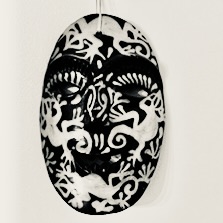
I chose Lenca mask because …
… it was was gifted to me by a family member from Honduras and is inspired by Lenca artisan traditions, particularly clay “root masks,” which hold cultural, spiritual, and communal significance. Traditionally, these masks are associated with ceremonies that promote peace, connection, and unity among communities, reflecting a worldview that centers collective identity rather than individualism.
In my work earlier in my career, providing in-home family therapy to immigrant families, I was often invited into spaces where families, even in limited living conditions, intentionally displayed aspects of their culture, such as art, decorations, and objects reflecting their countries of origin. These objects were not just decorative; they represented identity, history, and connection. They reminded me that while we may share a broader Latino identity, our cultures, traditions, and lived experiences are incredibly diverse and deserve to be understood as such.
This mask also represents something more personal for me, code-switching. As a Latina clinician, I often felt the need to adjust how I spoke, presented myself, or engaged in professional spaces, almost as if I were wearing a mask. Over time, I began to recognize how this impacted my sense of authenticity and my connection with clients. As I have worked toward “taking off the mask,” I have found I can show up more fully and engage in more meaningful, collaborative relationships.
This object reflects a broader truth in social work: both clients and practitioners navigate systems that shape how much of themselves they feel safe to reveal. The mask represents not only protection, but also the impact of societal expectations, power, and cultural norms. At the same time, its roots in Lenca tradition remind me that identity is also deeply connected to community, culture, and resilience.
As social workers, part of our role is to create spaces where individuals feel safe enough to remove those masks, while also reflecting on the ones we carry ourselves. In this way, the mask becomes more than an object as it represents identity, cultural continuity, and the ongoing work of practicing with authenticity, humility, and awareness of the systems that shape both our clients and ourselves.

