Cartoon (by Kal, 1987)

    S T E P H E N   J O R D A N

67 Stephen Jordan    kal cartoon

I qualified in 1988 as a social worker and began working for a local authority which covered economically declining mining villages in the North of England.

A year after I qualified, the ‘Cleveland case’ broke in the news and to my newly qualified mind social work mind child abuse appeared to be everywhere. My degree had helped me understand that I would be working in a hostile and challenging social, economic and political environment, with some of the most marginalised people in society, often disregarded and ignored, but the extent of poverty, abuse and hostility I experienced at times felt shocking and overwhelming.

Despite this, I found that at work there was much humour and laughter and often as a ‘soft southerner’- from the south of England, I was the butt of jokes and at other times I was an eager player in practical jokes. Humour appeared, to be the mechanism for helping work relationships and enabling myself and my colleagues not only to survive in this hostile environment, but to bond and to practice effectively. The laughter at work made me feel in one sense re-energized and uplifted, ready to meet the difficulties I faced in the day ahead, or at the end of the day helped me to process what had happened and to draw some solace from the day.


I chose Cartoon (by Kal, 1987) because …

… it illustrates how humour can communicate complex ideas and helps social workers get through the day. The object I have attached is from a cartoonist named Kal (Kevin Kallaugher) and first appeared in the Today Newspaper on 1/7/1987 and was a visual pun on the damned if you do / dammed if you don’t.

In the cartoon the figure of a social worker is strung up to a tree by his neck, by a lynch mob for taking a child into care from a family. In the next panel the same social worker is seen as being hung by the same group for leaving an abused child with a family. It’s poignant for me that this cartoon, now nearly 30 years old reminds me that recurring child deaths and the crisis they bring on in terms of social work identity and confidence, do not go away.

The cartoon always provides me with a wry smile and for years in practice I had it sellotaped to the notice board above my desk as it reinforced the idea that you can’t win, whatever you do, and that other people, even if they are ‘just’ cartoonists recognise this. For me it also says that the passions of the lynch mob are no way to address the issues of child abuse. I hope sometimes though that the lynch mob stops before the social worker dies and says “we were only joking – we really know you can’t always get it right and we understand you do a difficult job”.

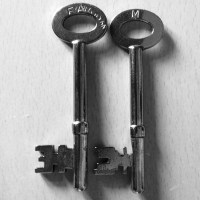
Keys (male and female)

P A U L   G U C K I A N

66 Paul Gulkian  66 Keys

Growing up in the 1960s I was strongly influenced by the changing world around me – the Civil Rights movement in the US and especially the role played by Martin Luther King. Europe was not immune to the blowing winds of change of the 1960s including civil rights movements in Ireland (North and South) and addressing the rights of minorities and vulnerable people. Included in the drive for human and civil rights was the process of deinstitutionalisation of the mental health services, eventually leading to the adoption of the current Recovery approach.

This atmosphere of change led me to study social sciences in the University of Ulster, Coleraine, Northern Ireland and then on to a professional social work course in UCD, Dublin. Working now as I do in the mental health field, I now have the privilege of lecturing on the MSW course in the National University of Ireland, Galway.

I was appointed as sole social worker to Our Lady’s Psychiatric Hospital, Ennis, Co Clare, Republic of Ireland, in October 1989.  Our Lady’s was opened as the Lunatic Asylum for County Clare in 1868 and closed in 2002.  My appointment coincided with the phased closure of psychiatric hospitals and the development of a community based multidisciplinary service under the then national mental health policy, Planning for the Future (1984).

On appointment I sought and eventually was given a pair of the infamous keys.


I chose these Keys (male and female) because …

I soon discovered that there was a certain status attached to the ownership of these keys as not all staff were allowed to possess them.

The first battle was to convince the powers that be that a social worker was suitable to hold a pair. The access to and from all the wards, including the separate male and female acute admission wards, was dependent on the decision of the key holder.  Many of the service users who used the first floor acute units talked of their generally very negative experiences of approaching the units for admission and knocking on the big doors and waiting for a key holder to let them in. Equally, they found the sound of the door closing and being locked behind them quite distressing.

During this time the mental health legislation in the Republic of Ireland was the Mental Treatment Act 1945, which was found to have been in breach of the European Convention of Human Rights under many headings, including not having a definition of mental disorder in the Act, no built-in independent reviews, and the possibility of service users being detained without review indefinitely.

We have moved on since then. The Hospital was closed in 2002 with the Acute Unit now based in the local General Hospital and the emphasis on a recovery-based model in the community. The Mental Health Act 2001 has brought with it a whole new rights-based approach, unimaginable even in 1989. I am no longer a sole social worker but head up a team of seven.

To this day I carry these keys on me at all times as a reminder of times past and a warning that even in our modern approach, issues of power and control are not forgotten and in vigilance that key pads and swipe cards do not become the keys of the modern era.


Work bag

   P R O S P E R A   T E D A M

64 Prospera Tedam   64 Work bag

I came into social work with some understanding of justice and injustice and believed that by studying for a degree in law, I could contribute to making the world a better and fairer place. When I was unsuccessful in my application to join the law programme at the University of Ghana, I was offered social work, which was a relatively new programme of study at that time. I was not entirely convinced that this was the career I wanted; how would this course assist me in achieving my aims, after all it sounded like something one did in their spare time, a ‘hobby’ of sorts! After speaking to a few people, I became aware that I could change the world through social work.

20 years after qualification I don’t have any regrets about the career I chose and now work in. I am now senior lecturer at University of Northampton where my doctoral research into the practice learning experiences of black African students in England has been another small contribution to making the world a fairer place.


I chose my Work bag because …

… It reminds me about my days in social work practice. This bag is significant because it was what I used when I worked in a local authority social work team. Its contents have a few reminders of the work I did then – my staff ID card, a few receipts and bits of paper from that time. The bag is worn in parts, perhaps indicative of how worn out I was at the point I made the decision to become a social work educator. The significance of retaining the bag for me indicates hope and facilitates reflection, two key components of social work.

Bags are used by many to hold valuable personal items and can also be considered as part of one’s image. Work bags may also contain important work related documents and items. I never left home without it. This is my social worker bag; it’s been zipped up and put away for about 11 years but still holds clear memories of the days when it was at my side as my faithful companion and contained all that I regarded as necessary to enable me carry out the daily tasks of working with children who are in our care.


Foundations

   J U L I A   W H E E L E R

65 Julia Wheeler   65 Foundations

After completing a CQSW in social work and a sociology degree in 1992 I have undertaken a number of jobs, mostly within children and families social work from London to Devon. I have lived in Devon for the past 20 years where I have continued to work with a focus on children and families, but I have also developed my career in working with social work students as a placement supervisor and practice educator. I have been in my current post as a social work lecturer at Plymouth University for the last six years, where I have maintained a focus on placements. I’m currently completing an Education Doctorate where I am interested in how social work students develop their professional identity.


I chose Foundations because …

… Buildings and how they are constructed and remain standing over long periods of time has always fascinated me. I am also interested in the people that reside and come and go through these buildings with their individual histories. For me, social work itself is the solid foundations of a building in terms of values, key skills, knowledge and so on. What constantly changes is the people within the profession, governments, legislation, policies, procedures, practices, and interventions. Despite the constant changes around the profession, social work foundations essentially remain the same, but the passion and the life of the profession is contained within the individual social workers above and the service users and carers they work with, in the ever changing building such as re-decorations, renovations and even extensions!

This perception that social work foundations remain stable and constant whatever is happening in the world is something that keeps me motivated within my own individual social work career and is poignant at the moment for me with the dynamic nature of social work education and practice.

Teapot

M E L I N D A   V A N   D E R   M E R W E

63 MELINDA VAN DER MERWE   63 Tea pot

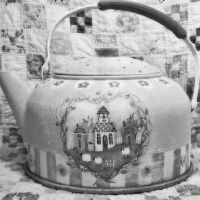
I am a third year social work student at the University of Pretoria in South Africa. I chose this profession because of the diversity of the field in itself, as not many professions have the opportunity or ability to make a real difference in the lives of the individuals, groups or even communities that they come in contact with every day. I have a passion for people and working with children. For a metaphor that best describes social work, I immediately thought of a tea pot as the most fitting comparison that may perhaps describe all the elements of social work inclusively.


I chose a teapot because …

 … It has a strong and secure exterior which creates a safe environment for the teabag to brew and ferment; this presents an opportunity for the perfect cup of tea to be created. In this ‘social work teapot’ we acknowledge that every person has capacity, which is their own (water in the pot). Each individual also has their own unique personality, dreams and goals – this is represented by the different flavours of tea. Social work as a profession provides people with the necessary resources and creates a safe environment for people to reach their full capacity and be the best versions of themselves. We see their potential – even if they don’t!

What could be better than knowing that you helped create the perfect cup of tea?


Handful of coins

   J A N E   M c L E N A C H A N

Jane McLenachan   62 Handful or coins

I began my social work career in 1981, working as a generic social worker in Falkirk in central Scotland. I believe this generic experience provided the best possible grounding and, as I have frequently told students in the intervening years, one I wish they could all have. I subsequently moved into more specialist children and families roles, initially in Surrey (somewhat of a culture shock!) and then as a child protection specialist in Derbyshire, where I worked for 12 years. I developed an interest in practice learning early in my career and worked as a practice teacher before moving into social work education. Having worked in England for 30 years, I returned to Scotland in 2014 and am currently Director of Practice Learning at the University of Stirling.


I chose my Handful of coins because …

… It symbolises the importance of good team working and support. Throughout my social work career, I have been fortunate to work with some excellent dedicated and supportive colleagues. This has often been an essential mechanism for coping with the stresses and pressures of the job, both in terms of challenges created by organisational processes and resources and those arising from the emotional impact of working with vulnerable, traumatised, abused and abusive people. As a child protection social worker, I was frequently undertaking parenting assessments and working with children who had been abused or were considered at serious risk of significant harm. Court proceedings in such situations were often fraught, lasting several days and could involve cross-examination by three or four different sets of barristers, all seeking to undermine my professional credibility and the evidence base informing my assessment. I am still reminded of these experiences when I reinforce for students the importance of sound evidence-based assessments and ‘defensible decision-making’, alongside clear, analytical thinking, writing and verbal expression. Keeping the needs and welfare of that vulnerable child or young person central ensured an ability to stay strong, focused and determined within the witness box.

However, a key factor in retaining the emotional resilience to withstand the onslaught within the court arena, was the knowledge of a supportive team, there to both reinforce my ‘expertise’ to take to the stand in the first place, and then for support in the aftermath if the court made decisions that I believed to be against the child’s best interests. Over twenty years later, there are some such decisions that I still remember vividly.

As a team, we always ensured that no-one went to court alone, even if it simply meant being the driver or making sure I had a spare pair of tights for when a finger was inevitably poked through them waiting to be called – the advantages of trouser suits are now abundantly clear! You may however, be wondering what all this has to do with a handful of coins and this leads me to our team safety valve. At the end of a week of traumatic child protection investigations, court proceedings or difficult sessions with distressed children or parents the team would decide it was time for a ‘Friday night’. Our venue of choice was a lovely old Derbyshire pub with open fires and quiet little corners where we could huddle together, re-live the traumas of the week, let the tears flow and express the anger and frustration safe in the knowledge that once it was all out, we would help put each other back together again, ready to hit Monday with rekindled energy and commitment to act in the best interests of vulnerable and disadvantaged children and families.

At the end of the night, we would pile into a taxi for a rather tortuous journey back to all our various homes. Into the hands of the last person to be dropped off, we would pile money for the taxi fare and Jackie, as this duty usually fell to her, had to spend the journey along winding roads, holding on to this handful of cash. For some reason, it seemed to be coins rather than the more sensible notes that we all deposited!

The importance of developing good support systems is something I have always stressed with student social workers. Whenever I think of that handful of coins in the taxi, it reminds me of the supportive team culture that was instrumental in enabling me to remain in front line social work practice for almost 20 years. In the current climate of austerity, the handful of coins also brings into sharp focus the need for us all to work collaboratively to argue for the resources needed to deliver both good social work services and social work education.


Putting Handful of coins together has actually been quite poignant as while I have been thinking about it, one of my old colleagues in Derbyshire died and I flew down for the funeral. A few of our old team were at the funeral and I was telling them about my plans to contribute to 40 Objects. We ended up getting the photograph done that day – the money in Jackie’s hands (as it was in the taxi), another of the team taking the photograph and the money coming from the team members. So it has ended up being a  real  team affair.

Whose welfare

   P E T E R   B E R E S F O R D

61 Peter Beresford 2 - Version 2    61 Whose welfare

I came to social work as a service user because of my mental distress. I came to it earlier for a short while as a worker in a welfare department and then later as an educator, researcher, activist and writer. Good social work and good social workers are greatly valued and respected by many service users. People talk over and over again about the importance of their advocacy and assertiveness on their behalf. They value the social understanding and social model that underpins good social work, which doesn’t just blame them for their difficulties. I can relate to all this. I am proud to have been associated with social work from a service user perspective and it’s no accident in my view that social work has been one of the professions most responsive to, and enthusiastic about, the involvement of people as service users and carers. I am now Co-Chair of the disabled people’s and service users’ organisation and network, Shaping Our Lives and part-time Professor of Citizen Participation at the University of Essex.


I chose Whose welfare, a social work book from a service user perspective, because …

… This book was a breakthrough for me. When the government was using people’s progressive intentions in social work and social care as a Trojan horse for cuts and privatization, the book tried to decipher what was going on and highlight the critical need for truly participatory policy and practice. We involved local people and service users in the process. It led to us getting our first research funding, when we had been living on benefits for years. It was produced collaboratively. It was funded by subscription – a kind of crowd-funding before it was invented. It also coincided with when I got some really good help including in-patient help to deal with my mental distress after long and grim struggles. So it signaled better times personally and I hope helped trigger much broader interest in user involvement in social work and social policy. The child on the cover represents an older woman in the book who hadn’t been able to get to the Brighton Beach for many years.

Magna carta

  M I C H A E L   P R E S T O N – S H O O T

 20120328-033 

One of four surviving copies of the 1215 Magna Carta. This copy is one of two held at the British Library. It came from the collection of Sir Robert Cotton, who died in 1631. In 1731, a fire at Ashburnam House in Westminster, where his library was then housed, destroyed or damaged many of the rare manuscripts, which is why this copy is burnt.

Having turned down the opportunity to undertake a doctorate in mediaeval ecclesiastical history, I entered social work with ideas that it was about contributing to social justice through working with people within their families and communities. I took a therapeutic turn after qualifying and then, once in social work education, found law as an avenue for combining the aspiration of making a difference at an individual and collective level. History continues to inform my teaching of law and of social work practice, looking to see what lessons we can learn from our individual and collective pasts.


I chose Magna Carta because …

… It combines my longstanding fascination with history with a more recent, but still some time ago, encounter with law for social work practice. Looking back over forty years in social work, I can see how social work, and the legal rules that surround and underpin it, have evolved, sometimes in keeping with social work values and research evidence and sometimes not. I can see that sometimes we have learned from social work’s history and sometimes not. Having studied mediaeval history and social work, both have informed my curiosity about how things are constructed and how we should challenge assumptions and images in order to reach a more informed understanding of our world and our position within it. Above all, however, Magna Carta’s on-going influence reinforces the importance of human rights and reminds us all that history matters and, like the present, speaks to people’s lived experience and it is that with which social workers continue to engage.

Traffic sign

    S U E   T H O M P S O N

59 Sue Thompson   59 Traffic sign

I became a social worker for a particular reason. That was to play a part in challenging the ageist attitudes and practices that I had long observed as being widespread in eIdercare. I like to think that I achieved this to a degree in my practice, particularly by helping those whose right to self-determination was not being respected, to fight their own battles. Making a difference at a broader level proved more difficult within the constraints of a local authority role, but I have retained a sense of professional pride, and the hope that I am still making a difference, by doing postgraduate research and encouraging critical reflection by co-writing social work texts.


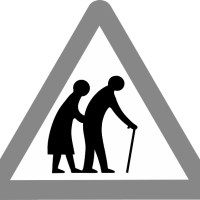
I chose Traffic sign because …

… It speaks to me of the power to portray particular perspectives of ‘reality’ as how things are and should be – in this case, that old age is necessarily about decline, rather than growth. It reminds me that, where dominant perspectives become ingrained, the stereotypes they support become accepted as the norm. And where this happens, a challenge to negative stereotyping is unlikely to happen without consciousness-raising happening first. But it also reminds me that we social workers should feel empowered to be part of the process of critically exploring taken-for-granted negative assumptions about particular groups of people – we have the skills and we have the commitment to promoting social justice. Yes, we can ‘help individuals across the road’ when they are experiencing difficulties but we can do much more.


Ceramic sculpture

    S H U L A   R A M O N

58 Shula Ramon   58 Ceramic sculpture

I’ve lived in Cambridge, UK, for the last 20 years, and like doing so. Cambridge is small and pretty, offering a lot of cultural activities that I do join in from time to time.

I like to travel, mainly to historical cities, and confess that I enjoy spending time in museums and old buildings. I have lived half of my life in another country, and worked for brief periods in a number of other countries. I feel this does give me a wider perspective on life than most people around me have.

I worked for some years as a social worker prior to becoming an academic by chance, rather than by planning. I like being an academic and researcher mainly because I can choose the themes to focus on, and because even when there are funding obstacles there is always an element one can develop further through research.

I enjoy teaching – at present I teach an MSc online on mental health recovery and social inclusion to students who come from different professional and life experiences. I also mentor a number of Ph.D. students, which is much more demanding work than straight forward teaching.

The key areas of my current social work research and commitments include media representation of social work, social work clients and social problems, involving service users in research and education, and a lot of mental health work which is very relevant to social work (e.g. shared decision making). The issue of the impact of political/armed conflict on social work has been a concern of mine for quite some time, and I continue to be engaged with it in a variety of ways.


This Ceramic sculpture is made as a mosaic of small blue and white circles put together to create a peaceful, eye catching, construction. It has been made by people with learning disabilities in Cambridge.

I have chosen this Ceramic sculpture because …

… It symbolises for me the often neglected abilities of people with learning disabilities, their strengths, and ability to give to the rest of us. I am committed to the promotion of the strengths approach in social work and in mental health. The object has a central place in our living room, and visitors often ask about it and share with me the pleasure it gives.