Fish net

G I E D R Ė   K V I E S K I E N Ė

Giedre    110B Fish net

My friendship with social work is related to my research interests, which are social economy and education policy with a focus on positive socialization, communication, social business and smart socialization. In many scientific, practical journals and monographs I have analyzed children and families welfare through positive socialization, social partnership and innovations. At the same time I am a founder of various NGOs, such as the temporary child care homes “Atsigrezk i vaikus“[1], Lithuanian Social Pedagogy Association[2], and Confederation for Children[3]. For Baccalaureate, Master and PhD degree students I am teaching social communication and mediation, smart socialization and social technologies courses in Vilnius, Lithuania.


I chose Fish net because …

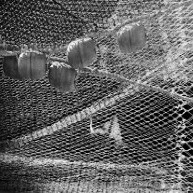
… post-modern culture is a network culture. For me, fish net symbolizes connections, especially between NGOs and the public and private sectors. Fish net symbolizes sharing, teamwork, social partnership and social clustering culture. The network calls for our connections to be useful: to catch fish and seafood – in other words, to develop a senses of ‘welfare’ that is of a new quality. The possible conflicts between individualization and cooperation, and between localization and globalization are challenges for the theory and practice of contemporary social work and social pedagogy. Fostering an individual identity whilst accepting differences is a real challenge that networks can help to meet.

My experience has been gained through conflict mediation and creating network organizations to consolidate the social professions and help to resolve social problems at local, national and global levels. Building trusting and authentic relationships is very important for modern social work and social pedagogy. Through relationships we can solve social problems, show society how we can manage them, become role models of social partnership and social innovation. Each of us is a unique person and only after an assessment of this uniqueness can we find out what benefits can be received when pool our collective talents.

[1] http://atsigrezk.org/

[2] www.lspa.lt/

[3] https://lt-lt.facebook.com/nvovaikamskonfederacija/

Mobile garden

E G L Ė   C E L I E Š I E N Ė

110C Egle    110C Mobile garden

I live in Vilnius, Lithuania. After completing a PhD in multicultural work in 2011, I started teaching at the Lithuanian University of Educational Sciences in Vilnius, where I am Associate Professor in the Social Work Baccalaureate and Social Work Master degree programs. I am also the Director of the Lithuanian College of Democracy (an NGO). My research interests are social communication and NGO sector development and I work with children at risk and their families. Together with international partners we are searching for social innovations and new methods to integrate working with children and their families participating in various activities, such as the Play for children with disability network (LUDI) and social clustering projects.


I chose Mobile garden because …

… children and their families need incentives to grow things, and through the growing process we can engage entire communities, not just individual families.

Traditional social work services tend to be bureaucratic, fire-fighting services. In contrast, my experience of working in the NGO sector has shown the possibility of working with children at risk and their families using more lasting kinds of intervention – by helping parents to spend quality time with their children, chatting and communicating with them, taking a main meal at home with them, spending holidays and leisure time together, in these ways we can devote much more attention to them.

We help every child who is growing up in a family at risk, or in a poor environment, to have access to diverse services that range from developing social skills to participating in socio-educational programs, such as day care centres, camps, vocational training and subsidised employment.

Trees

   E D N A   C O M E R

Edna Comer   Trees

I grew up in rural poverty in the U.S. During my early years, my family was mostly self-sufficient but on one occasion we experienced stressful life and financial hardships beyond our resources. The process of seeking services included a social worker who did an assessment of our family situation. I expected the social worker to be respectful, ascertain our family’s strengths and help us to meet basic living needs. Unfortunately, she showed no empathy or compassion toward my family. Confused and angered by the experience, I hoped that it was not typical of social work practice and vowed to learn more about the profession.

Today, after forty years as a social worker, I have concluded that this experience enhanced my understanding of inept social work practice and helped me to work toward compassionate and competent social work practice.


I chose Trees because …

… they are one of my favorite elements of nature and a metaphor for social work practice. They are majestic, many stand tall, branches stretch outward and upward, roots firmly planted in the earth. Trees are flexible, they sway and bend in the flurry of the wind and during harsh storms. Trees provide space and shelter. Depending on their quest, creatures may find a quiet place, peace, refuge, shade. So many types of tree, each with its own charge, whether producing fruit, beautifying the landscape, or nurturing the earth. Trees are planted for economic gains, to enhance individual homes, neighborhoods, and recreational spaces. Their presence is most prominent and impact greatly felt in the forest when many of them stand together. Trees exist over many generations, sometimes becoming historical domains.

I am enamored by trees but not blind to some negative characteristics, too. Trees without adequate nutrients and a firm foundation are vulnerable and at risk of extinction. Trees not firmly anchored in the earth may be overturned by a mighty storm or raging winds. Falling limbs or whole trees have been known to damage or destroy buildings, wound or even kill people.

Like the tree:

Social work is well recognized in many locales and continues to grow in others. Social work is strong and historically anchored in a value base that enhances human well-being and helps all people meet basic needs. It tackles societal issues through various forms, including providing direct services, advocating for policy changes, and helping to organize communities to address problematic situations.  

Though not vulnerable to extinction, social work has its challenges. Its relevance in a society that places greater value on financial worth rather than human dignity is always an issue. One aspect of practice is to develop a structure for rapid engagement and mobilisation of vulnerable and oppressed peoples who are affected by adverse social conditions that suddenly arise and affect their wellbeing. Continuing training is important to equip social workers with tools for compassion and competence.

Similar to the tree, when viewed in its entirety the benefits of social work practice far outweigh the risks. Even though my first experience with a social worker was not ideal, today I know that social work is an honorable and valued profession of which I am grateful to be a part.

Heart

J U R G I T A   Z A B U L Y T E   K U P R I U N I E N E

110G Jurgita Kupriuniene   IMG-20160715-WA0004

I dreamt to become a doctor or teacher, but came to social work. I realized that it is not simply a profession or job, it is a lifestyle and who I am.

I grew up in a family where there were strong values of sharing, human relationships and helping others to thrive. It seems to me, then, that I am a social worker from my early childhood! I remember hearing, “you can not change the world” when I was young, and now I know: helping a person will not necessarily change the World, but it will change the world for that person.

Now I combine many roles – a lecturer, researcher, social work teacher in a Lithuanian university, and also I am a certified emotional intelligence practitioner and coach. I realize that social emotional abilities are the key ones to become happy myself and to help others to become happier.


I chose Heart because …

… I believe that heart symobolizes the truest kind of wisdom, emotional intelligence which I locate at the heart of social work practice. A social work practitioner could be an experienced professional, know a lot and apply various methods and techniques, but if he or she relates with clients only from a cognitive perspective, they will succeed less. Why? Because emotional intelligence in social work is what matters!

The elements of emotional intelligence such as empathy and emotional navigation need to be be integrated into social work practice; this approach emphasizes the perspectives of clients. Emotional intelligence contributes to the development of the relationship and speaks to the social reality in their lifes. ‘EQ’ (as opposed to ‘IQ’) has much to offer to social work as a concept and raises the importance of considering the emotional context of social work practice more deeply and broadly. I decided to explore emotional intelligence as a key strategy to improve social workers’ and clients’ mutual well-being.

Socially emotionally intelligent and skilled social workers demonstrate empathic behavior, encourage healthy communication, and create more open and effective environments where clients feel safe, valued and accepted. Much research points to the importance of helping professional practitioners to develop social-emotional abilities to help their clients effectively: self management, self and social awareness, relationship skills, and responsible decision making. Experiential groupwork training for social workers can help them to understand their behavior patterns and get deeply into their self and social awareness. I have found it very important to enhance the emotional literacy of social workers. When social workers have the ability to recognize, understand, label, express and regulate emotions, they can provide clients with positive role models and the resources needed to thrive. I do believe that!

I have various heart symbols, given me in the emotional intelligence certification course – smooth, rough, angular … I always check my personal Heart before getting in touch with a client – what does it look like and how does it feel for me and for the person I am relating with … ?

Vinyl

     B R I A N   K E L L Y

110H Brina Kelly    SOWK_40_12_

After playing music throughout much of the 1990s, I returned to college in Chicago in 2000 intent on studying psychology. After several courses and lengthy conversations with my professors, I realized that social work was a better area of study and practice for me. While pursuing bachelor’s and master’s degrees, and ultimately a PhD in social work, I took every possible opportunity to take classes outside the discipline. Courses in gender studies, histories of HIV/AIDS, the U.S. counterculture of the 1960s, and performative research methods opened my mind to important dialogues on intersectionality, critical theories, constructivist epistemologies, and ultimately taught me that context matters.

I never lost my interest in music and have spent several years researching and writing about the intersection of social work and music. The connection between the two is clear: from the days of the settlement house movement of the late 19th century through present day, social workers have used music to effectively engage clients and communities. I’d like to see social work practitioners, educators, and researchers pay more attention to this connection as it has much to offer in terms of promoting strengths-based practice.

Recently, several electronic music journalists and some scholars have written about the history and importance of queer club culture and dance music in the U.S. These authors argue that context matters when we think about the history of club culture, which is now a multi-billion dollar, international industry. At its origin, club culture was often gay, of color, and often poor. Clubs served as safe havens and spaces for cultural celebration, which might also be defined as a demonstration of individual and collective strengths.


I chose Vinyl because …

… I’ve been thinking a lot about this history and the role of music in bringing people together. While it may sound trite to write about “the power of music,” there really is something powerful about it. I’ve seen DJs put on records that have cleared a dance floor in seconds and, similarly, brought tears of joy to dancers’ eyes. Either way – powerful!

This particular record (Light of Love, by The Miracles Club on Ecstasy Records) reminds me that context matters. These producers acknowledge and build on their influences, which are Chicago and New York House, even down to the Keith Haring reference in the center label artwork. These nods to context and history are important as it reminds the listener this music does not exist in a vacuum. Rather, it is part of a larger dialogue, grounded in queer club culture, which has been developing for years.

As a social worker, I want to know this. I want to bring this cultural and contextual knowledge into my work. Music has the power to teach us much about those we have the honor to work with. I want to keep that up front and learn from it, learn from them, and hopefully boogie a little while doing it.


Riad’s ID card

    G U Y   S H E N N A N

110H Guy Shennan     110A ID card – Version 2

I’m not sure I had ever heard of social work before I went to University, then met a charismatic socialist social work masters student in my first term – we played football in the college team together – and my first impressions were exciting ones. Despite all the social-work-related trials and tribulations experienced in the 35 years since then, my impressions remain fundamentally the same. I was excited enough about social work in early 2014 to apply to be the chair of the British Association of Social Workers and it is a post I am thoroughly enjoying. I have, however, retired from playing football.


I chose Riad’s ID card because …

… in November 2013, at a conference of the Palestine-UK Social Work Network in London, the Palestinian Ambassador to the UK startled the network’s organisers by announcing during his opening address that the following year’s conference should take place – in Jerusalem! The President of the Jerusalem branch of the Palestinian Union of Social Workers and Psychologists (PUSWP) pledged that they would organise this, even though he knew that most Palestinian social workers would not be able to attend. He had previously explained the symbolic importance of PUSWP’s head office being in Jerusalem, as the capital city of Palestine, even though most of PUSWP’s members would be prevented from visiting it and membership of PUSWP is actually illegal in Jerusalem according to Israeli law. To have the conference in Jerusalem was of equal significance.

A year later the conference took place, over two days, the first in Jerusalem and the second in Bethlehem. Riad Arar, the President of the Hebron branch of PUSWP and one of the main organisers of the conference, was not present on the first day. Riad has not been allowed by the Israeli government to enter Jerusalem, 19 miles from his home in Hebron, since 1998. There are about 500 Israeli army checkpoints in the West Bank and Jerusalem, and Riad can be stopped and asked to show his ID card at any of them. One of the most difficult aspects for Riad is the apparent arbitrariness of the soldiers’ decisions on restricting his freedom of movement. I have been through a checkpoint with him in Hebron, to visit Qurtuba primary school, when he was allowed through, but when taking other international delegations to visit this school situated in the heart of an illegal Israeli settlement, Riad has been refused entry.

I have run training courses in Palestine, and the social workers who attended arrived at various times during the morning depending on how many checkpoints they had had to cross. I try to imagine what the day-in-day-out experience of this would be like as a social worker here in the UK, not knowing what time you might arrive for a course, at a meeting, at a service user’s home, or even whether you could get there at all, but it’s not easy.

Principles of social justice, human rights and collective responsibility are central to social work, according to its international definition. Who should take responsibility for the denial of the human right of freedom of movement for Riad Arar and our other Palestinian social work colleagues?

Bella

   J O A N   C A W S T O N
Joan Cawsten    110D Joan Cawsten

I first encountered social services in 1954 when I was five years old, when some ladies came to our house and took me, my 3 year old sister and my one year old brother away from my mother, out of our house, down the cobbled street, lined with curious neighbours and into two waiting cars. I never saw my mother again.

This surely cannot have been my mother’s first contact with social services, but for us it was a bolt out of the blue. We were terrified. We were never told why we were being taken into care, either then or later.

I despised my mother until I was in my 20s, believing that she had simply abandoned us as she never came to see us in the children’s home on visiting days. One day during a visit to the matron of the children’s home who was then long retired, Matron casually remarked that the ‘powers that be’ had decided that when we were taken into care my mother should not be allowed to see us. Matron said she turned up often in the first few months and would get hysterical before being sent away, but eventually she gave up coming. How cruel. Just writing this makes me cry for her.

I grew up in the children’s home, leaving when I was 16 because it was obligatory, and placed with foster parents, who were totally unsuitable. I was given no choice and never met them until I was taken by a social worker to their house to live.

What was life in the children’s home like? Well, it certainly wasn’t the best of times although we did have some very good times; and it was by no means the worst of times, although there were a lot of bad times. Christmasses were good. We got presents and we didn’t mind at all that they were second hand. Easter time we got Easter eggs and Bonfire Night was always brilliant. Fireworks, special food – Matron made wonderful toffee – and there were jacket potatoes cooked in the bonfire to eat once the enormous bonfire had died down and the Guy which we had lovingly dressed and stuffed with straw had burned to a crisp.

I think in those early days Children’s Homes must have been relatively new as everyone called them Orphanages and us orphans. This upset me and the other children in the home enormously and we would always object loudly and say that we weren’t orphans because we did have parents. Why we felt it was worse to be an orphan than it was to have parents who were unable or unfit to look after their own children I do not know, but we all did.

The focus of care was solely on our physical wellbeing. We were punished often, being smacked hard and sent to bed straight from school without any supper – but that wasn’t unusual, as we were smacked as hard at primary school by one of the teachers, too! But we had good food, got plenty of exercise and lived in a big house with a gardener and a cleaner. We were kept fit and healthy but we were never hugged, never kissed goodnight, rarely praised, never given any emotional support, never spoken to lovingly by the women who took care of us. Never loved by the adults in our world. We weren’t treated as children with feelings. In many ways it was cruel and pitiless.

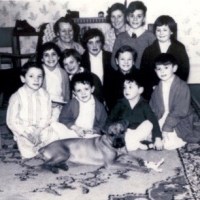
I contacted my friend June with whom I grew up in the children’s home to ask her about her memories. Our birthdays were one month apart and we were inseparable as children. There were many objects we could have chosen, some the same, some personal to each of us, but I totally agreed with her that our ‘object’ had to be our Boxer dog, Bella. This is what June wrote:

“ … Bella our boxer dog comes top of my list because she was always there when I needed something to love. I used to get in her kennel with her, do you remember it consisted of a huge wooden freight case (it stood next to the oven in the kitchen) and it stunk to high heaven of dog!”

We all loved Bella and Bella loved all of us – always, indiscriminately and lavishly. She was a wonderful dog, placid and gentle and endlessly affectionate with us, but the terror of postmen and delivery boys. She would always try, and sometimes succeeded, in biting them, which we knew was quite simply further proof of her love, devotion and desire to protect us. She could do no wrong in our eyes.


So, beautiful Bella, I chose you because …

… you epitomised unconditional love and acceptance, a wonderful antidote to the emotional austerity of life in a children’s home in Yorkshire in the 1950s and 60s.

Round table

F A B I O   F O L G H E R A I T E R

110 Fabio Folgheraiter

Conference Table with clipping path

I teach social work and coordinate both bachelor’s and master degree courses in an Italian University, in Milan. I am currently involved in planning education and training activities in academic and fieldwork settings for social workers and social services managers. I have been engaged in community social work, mainly in mutual/self-help groups for people with alcohol addiction. In doing this, I met many social workers and volunteers, as well as service users and carers, deeply involved in their new social movements and empowering initiatives. I am co-founder and co-manager of an Italian publishing house – Edizioni Erickson, Trento – focused on special education, inclusive education, welfare policies, and social work.


I chose Round table (of several chairs in a circle) because …

… I remembered that ancient Greeks and, in the Dark Ages, mythical King Arthur and his knights, knew very well that “sitting in a circle is the best ritual for a meeting.” In my view, helping people to come together freely so that they can build solutions to their life problems through dialogue is the essential core of all the social professions. Planning meetings is one of the most important social work activities. Sitting in a circle is important, too. No one sits at the head of a round table. Everyone can look at others in the eyes and can be seen by everyone else at the same time. People are all at the same level, including the social worker.

Meeting at a round-shaped table means respecting mutuality, parity, and equality of voice. Every time a social worker tries to help people reflect on and agree on shared aims, those people should feel free to talk at the same level as all the others, though from a variety of positions, roles and personal perspectives. No social work intervention should be a manipulation by an expert, but rather help given in order to do things together. This is true both with regard to multi-professional team meetings and with regard to networking meetings where social workers leave their offices to work with service users, their caregivers, volunteers and so on in their local communities.

The circle shape conveys a principle of parity which, in turn, evokes empowerment – the idea that people should have the power to take decisions for their own lives and to act in their own best interest. Obviously, this power is never an absolute one, but it is a good enough one. Therefore, social workers can trust people in need and take for granted, until proved otherwise, that they have thoughts, words and feelings capable of producing desired changes.

When social workers gather people together, they should avoid have them sit at the usual angular, sharp-edged table. Social workers should always think according to the democratic round table.

‘Paper plates’

K L A U S – M A R T I N   E L L E R B R O C K

110F Klaus-Martin   100F Paper plates

I grew up in an environment where community workers were trained on placement and this experience had a large influence on me. During my studies I participated in community work practice projects. My professional socialisation has also been influenced by my time as a scout, where I had my first experiences of working with groups. Later, these experiences were integrated in my practical work in the technique of “Social space coordination” and I developed a project in Blumenerg, Germany.


I chose ‘Paper plates’ because …

… a group of older citizens were facilitated by a social worker and became really engaged in changing their district for the better. However, some of these nice improvements were vandalised. The older people are thinking that the young people who congregate around the subway station are responsible for this distructiveness.

So the social worker (groupworker) who started the older citizens’ group and the steet worker who is in good and regular contact with the young people meet with each of these groups to explore the ways they use and live in this joint public space. This coming together is negotiated, using different methods of a technique known as ‘social space orientation.’

Both groups meet with each other and explain their interests. In a second meeting both groups have a walk around the district and show and explain their experiences of living and being in the district so they each get to appreciate how each different group experiences this social space.

During the preparation for these encounters the young people discussed whether to keep their anonymity. In the end they agreed to meeting the older citizens showing their faces, but they wanted to hide their faces when it came to photographs. Smiley faces like Paper plates were used to do this. Thus, the young people’s privacy was respected; they understood the difference between the boundaries of their contact with the older people where they showed their faces, and the boundaries with the wider world.

Bus

   G A B E   B O L L I N G

Gabe Bolling    Bus

I began my professional social work career barely over one year ago as a therapist working with adults with substance use and related disorders. During internships (placements) at my university, I worked with children in state residential custody, juvenile sexual offenders, and families in transitional housing as a case manager. Coming from a family that preached love and acceptance, and with a mobility-impaired father and a mother who was the primary earner, gave me a perspective that continually pushes me to seek the best way to help those in need. I am relatively new to professional social work, but I am ecstatic to see the future and what it holds.


I chose Bus because…

…in an assignment during my college years we were asked us to describe ourselves as an object and write a paper on it. After pondering, for what seemed like forever, I remembered the experiences I had on the school bus as a child. Living one and a half hours away from the school by bus, I spent much of my formative years on the bus. From these experiences, including bus crashes, multiple breakdowns, overcrowding, fights, forming friendships, yelling, etc., I developed a great portion of my identity.

Buses, much like we social workers, touch a significant portion of our clients’ lives. We pick them up where they are at and transport them to a destination of their choosing. The client can end the journey earlier than their pre-designated goal. Our client, if envisioned as a bus, comes to us in some sense of maintenance and carrying a heavy load, whether it is other people, cargo, or a combination of varying influences. We, as the driver, help to teach, demonstrate, provide resources for, or counsel our client on how to drive, operate, and perform routine maintenance of their own bus. Each client may have a different size, style, and design of bus, but we read through the manuals we are provided by the client and manufacturing companies, all to provide the client with a better understanding of their own bus. All the while, we are all constantly on our own version of a bus to get from one place to another in our careers and personal lives. Buses have touched all of our lives through seeing them transporting others, riding on them, working on them, or even conceptually and metaphorically through our direct practice with clients. This is why I chose a bus, because a bus has significantly impacted my life, and on some level has impacted each person’s life, directly or indirectly, as we and our clients do on a daily basis.