First Clare

H A R R Y   V E N N I N G

77 First Clare cartoon

77 First Clare

“Sometimes I just don’t think I can go on, I feel utterly crushed by the relentless round of desolation and despair …”

      “I know, I know.”

“Don’t patronise me! How can you possibly know the inner turmoil I suffer, day in, day out …”

     “Look, this is obviously a bad time for you. Perhaps it would be better if we arranged another meeting.”

“Good idea. Come back next Tuesday and I’ll finish writing up your care package.”


I was asked to do a cartoon for a magazine called Care Weekly back in 1995, and came up with Clare In The Community. I did four jokes about social work and was worried I didn’t have any more in me.

Care Weekly folded about 2 weeks after I joined, so I sent the four cartoons to The Guardian. I have been drawing Clare In The Community ever since.


I chose this cartoon because

… it started the whole thing off, and the subsequent 1000 cartoons I have drawn are basically variations upon it.

Foundling hospital token

    H A R R I E T   W A R D

76 Harriet Ward    76 Foundling hospital token

After leaving school, I spent several months as a community service volunteer, and was sent to work in a children’s home. It was not a very good home (it closed down soon afterwards) and many of the staff and the children were unhappy, but it was as a result of that experience that I became interested in social work, particularly with children and families.

I qualified as a social worker in 1973, at Oxford University and then worked as a practitioner until 1977 when my first child was born. We were generic in those days, working right across adult and children’s social services, but my primary interest was always in children. I spent much of my extended maternity leave reading about the history of social work with children and I never returned to practice because when the time came I was hooked on research. Since 1989 I have been a more or less fulltime researcher undertaking empirical studies designed to inform policy and practice on issues such as how outcomes of care can be improved, and exploring more theoretical questions such as the circumstances under which it might be legitimate for the state to intervene in family life. I founded the Centre for Child and Family Research at Loughborough University in 2002 and directed it until I took semi-retirement in 2014. I am currently a part-time research professor.


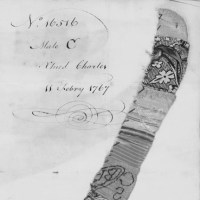
Foundling hospital token is a scrap of material left by a mother who placed her baby in the Foundling Hospital in 1767. The Foundling Hospital (now Coram) is the oldest British children’s charity, founded by Thomas Coram in 1739 for the maintenance and education of exposed and deserted young children, although increasingly admissions policy focussed on illegitimate children whose mothers had been abandoned by their fathers.

The policy of the Hospital was to relieve the mother of all responsibility for maintaining her child on the understanding that all future contacts would cease. Both mothers and children were thought to benefit – the mother by being given the opportunity to eradicate what was seen as a shameful past, and the children by being given ‘a good Christian upbringing’ that might to some extent mitigate the shame of illegitimacy and prevent them from repeating their parents’ mistakes. Right up until the mid-twentieth century babies who were placed in the Foundling Hospital were re-baptised after admission, mothers were not informed of their new name, and all links with them were deliberately broken. Until the late nineteenth century, very few birth parents could write; they left a token such as this with the baby so that, if they were ever in a position to reclaim them, they had some way of proving that the child was theirs.

Towards the bottom of the token is an embroidered heart, cut in half. This was a common emblem, appearing on several tokens in the Foundling Hospital archive, symbolising the pain of separation, and the hope that one day the two halves of the broken heart might be reunited. However, only a minute number of Foundling Hospital children, estimated at less than 1%, ever saw their parents again.


I chose Foundling Hospital token because …

… At a personal level it represents for me not only the very early days of a care system that is still, in some ways, recognisable today, but also the beginnings of my research career – my first research study explored the history of social work, though it focussed on the history of children who came into the care of the Waifs and Strays Society (now the Children’s Society) in the nineteenth century rather than the Foundling Hospital a hundred years earlier. It also represents my conviction that we cannot truly make sense of the present without an understanding of the past.

My other reasons for choosing this Object are more fundamental. The Foundling Hospital tokens, and particularly the fractured hearts, represent an enduring theme in social work – that of separation and loss. The tokens were also chosen by parents; they provided a unique opportunity to allow parents to express, if only symbolically, their point of view. Some parents revealed nothing – they simply tore a strip off the clothes they were wearing, but others painstakingly embroidered initials and hearts on their tokens, or left the child with a piece of jewellery or a coin, presumably hoping that this might serve as a memento even if they were never reunited. In my view the tokens can be seen as emblems of the pain that is always incurred when parents and children cannot live together, even when the separation is obviously necessary and clearly in the interests of the child – and many of the Foundling Hospital infants would have been abandoned or died of starvation had they not been admitted.

A contemporary study which I and some colleagues have just completed, in which we have been following abused and neglected children from infancy until their eighth birthdays, graphically illustrates this point. The interviews with birth parents who have not been able to meet their children’s needs articulate an overwhelming sense of loss and failure when children are placed in care, even when they agree that the decision is in the child’s best interests. Perhaps the Foundling Hospital tokens serve as a reminder that such decisions will always have painful consequences for some of the parties involved, even when children are better safeguarded from harm and achieve better outcomes when placed away from home.

Another key reason for selecting my Object is because the tokens represent a link with a different past. There is important research being undertaken in Canada that reveals that a key element of the process of identity formation is ‘acquiring a working sense of one’s own personal persistence in time’ and that young people are at their most vulnerable when this thread that links past to present is weak. None of the Foundling Hospital children saw their tokens again after they had been admitted – they were filed away along with the parent’s petition for admission, their potential significance for the children unacknowledged and lost. However one of the issues that arose again and again when, a few years ago, we were conducting research interviews with young people who had spent lengthy periods in care was the value they placed on photographs, jewellery and other personal possessions – Objects – that served as a link with home. Such possessions formed an obvious link with their birth families, but they also symbolised a continuity between the past and the present. However, many of the children and young people we interviewed were resentful because residential staff and foster carers had failed to appreciate their significance and a number of these cherished objects had been lost as they moved from one placement to another.

My final reason for selecting this Object is that I think these tokens show that, in spite of all the problems that beset the care system today, and all the difficulties facing social work with children and families, there have been advances. We no longer think that illegitimacy is shameful, or that parents (and their children) should be punished because they are not married. We no longer think that children who become the subjects of care orders should be permanently separated and/or denied contact with their birth parents. We no longer think that adoption should entail secrecy or a permanent rupture of the bond between parent and child – in fact the most recent research indicates that communication openness is an important factor in the successful adaptation of adopted children. These are positive changes that indicate improvements in our understanding of the needs of very vulnerable children and their families, and they should be celebrated.


Cane

    M A R Y   E.   G A R R I S O N

75 Mary Garrison   Cane

I came to social work after a journey of working with people but never finding my true calling. Ultimately, it was on my interview day at a community mental health center that I met a man who changed my life. He displayed symptoms of schizophrenia and we spoke for a short while but I knew after connecting with him I wanted to be a social worker in mental health. I was committed to meet my goal as I wanted to do all I could to help others and advocate on their behalf. I received my MSW (University of Illinois at Urbana-Champaign) and became a licensed clinical social worker and worked in direct practice for 12 years. My career path took me to academia where I am now an Associate Professor of Social Work at Millikin University. I have the distinct honor of working with students educating them about the social work profession and specific areas including community mental health, poverty and ethics. My journey has been life changing allowing me to understand how essential it is to advocate for social justice, provide services to individuals that will honor one’s dignity and worth as a person and value the importance of their human relationships. I strive for integrity in all I do.


I chose this Cane because …

… It belonged to Arthur, a 54 year old man with a diagnosis of schizophrenia who had been in treatment for more than 20 years. His treatment included medication, case management, residential and community support. Arthur had poor hygiene and grooming and poor communication skills, all of which led to a life of stigma and marginalization.

The story of this cane unfolds as Arthur arrives home after a day in a rehabilitation program. He is displaying signs of confusion and imbalance. He was unable to articulate anything that was helpful in deciding in what to do. Arthur has had a history of needing the regular removal of a build-up of ear wax which often times has led to these same symptoms – confusion and imbalance. With that knowledge, I took Arthur to his doctor the next morning, but a check revealed no clogging. Arthur was silent as we sat in the exam room with the nurse. Given his symptoms weren’t related to wax build-up, I advocated for a thorough physical exam. However, instead, the doctor gave Arthur this cane to help with his imbalance and told me to call back in a few days if things were no better.

We made it back to the group home where almost immediately Arthur lost control of both bladder and bowel. He was unaware of what had happened and staff cleaned him. He continued to show signs of confusion and imbalance and after an hour or so I decided we needed to go to the emergency room.

With cane in hand to assist him with his balance, we were off to the emergency room. We waited several hours and when the doctor came in, he spoke directly to me without acknowledging Arthur. I introduced Arthur and asked him to share with the doctor what he was experiencing and filled in the blanks as I could. The doctor felt it must be an issue with his psychiatric medications. Because I knew Arthur so well, I was confident that these were not an issue and something else was going on; this was something new. The doctor refused my request to run blood tests and a CT scan. I told the doctor that Arthur needed to be examined thoroughly and I wouldn’t allow him back in our group home until we knew more about what the problem was and how best to plan Arthur’s care. After a long standoff, the doctor agreed to some blood tests and upon receiving the results saw immediate cause for concern and agreed to admit Arthur for the night. As Arthur got settled in, I waited and assisted him as I could with the cane at our side at all times. Arthur held the cane even when in bed, almost as a support beyond his balance. Arthur had some tests run over the next few hours and when I left him he was resting. I told him I would return the next morning.

When I arrived the next morning, Arthur was lying in bed. A team of doctors walked in quickly and looked at me and Arthur. Looking directly at me one of the doctors told me that Arthur had cancer that had matastized throughout his entire body. I turned to Arthur and asked if he heard what the doctor said and if he knew what that meant. Arthur shook his head yes. I asked the doctor about treatment and what his prognosis was – how long would he have to live. The doctors said that he only had a few weeks and they would refer him to a hospice. They looked at Arthur and said “if you want to get up, be sure to use your cane,” and then left the room.

Arthur could barely get out of bed, let alone walk with a cane. He smiled and said Ok, in his quiet voice. The doctors left and I sat with Arthur. I brought along a large Hershey candy bar (his favourite thing ever!) and as I handed it to Arthur, he said, “Thank you. I would like you to please leave because I do not want you to see me in so much pain.” Arthur had the most understandable speech I had heard in ten years – completely clear and deliberate in what he was saying. Yet it was hard for me to hear Arthur say he was in pain as, from what I could tell, he had never been able to feel pain before– there had been times where he had burned his hands on coffee or fell and hurt himself but never expressed pain from it when we asked. Now it was different. The cancer had ravaged his body and he was on morphine to help the pain. He was going to die soon and there was nothing that could be done, so the doctors said. I respectfully left Arthur, saying I’d be back in the morning. I noted that he had his hand on his cane.

I received a call that evening that Arthur had died. Arthur had no family (we at the group home were his family), so I collected his belongings – his clothes, glasses and wallet. And there lay the cane.

I have kept the cane ever since. It is a constant reminder of how important it is to advocate for individuals who have no voice. We will never know if there would have been a way to know Arthur was so ill with cancer earlier, but I believe that if over the years a doctor had taken the time to look at Arthur as a whole person, he might have lived longer.

Research tells us that individuals who experience serious mental illness die 25 years earlier than those who do not experience serious mental illness – why is this? There are many reasons including the lack of treatment for those suffering due to stigma and problems with coordinated care to treat the whole person – mentally, physically and spiritually. This cane represents a gentleman who was a victim of exactly that stigma and lack of integrated care for his whole person.


Hogarth’s Thomas Coram

J A N E   M c L A U G H L I N

Jane McLaughlin   74 Hogarth's Thomas Coram

I am not a social worker but I work for Whiting and Birch, a publisher in the field. In addition to this work I am a published writer of short stories and poetry.


I chose Hogarth’s portrait of Thomas Coram because …

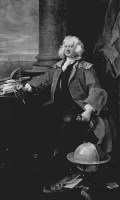
… of my admiration of William Hogarth as a painter and social commentator; his works such as ‘Gin Lane’ and ‘A Rake’s Progress’ still form part of our social and moral consciousness. Of course this painting is from a period before social work roles were established, when there was only philanthropy and charity. Hogarth supported the work of the Foundling Hospital established by Thomas Coram; the work done by Hogarth, his subject Thomas Coram and others like them was the foundation of the principles and practice that grew later into social work.

William Hogarth, who was childless, had a long association with the Hospital and was a founding Governor. He designed the children’s uniforms, the Coat of Arms, he was an Inspector for Wet Nurses, and he and his wife Jane fostered foundling children. Hogarth also decorated the walls of the hospital with works of art donated by contemporary British artists – the Governors being unwilling to spend money on such ‘ornaments’ [1].

I also chose this object because Thomas Coram, the subject of the portrait was a social innovator whose work continues today through the Coram Foundation which provides services for children ranging from adoption to health and drug education. He was a successful merchant who devoted many years of his life to getting funding and support for the work.

While living in Rotherhithe and regularly travelling into London to engage in his business interests (a journey of about 4 miles), Coram was frequently shocked by the sight of infants exposed in the streets, often in a dying state. He began to agitate for the foundation of a foundling hospital. He laboured for seventeen years, and induced many ladies of rank to sign a memorial. A charter was at last obtained for the Foundling Hospital, considerable sums subscribed, and the first meeting of the guardians were held at Somerset House 20 November 1739 [2].

There was of course at the time enormous stigmatisation and indeed persecution of unmarried mothers and the Foundling Hospital aimed not only to care for the children but to give the women a chance of a better life.

Mothers brought their babies to the Foundling Hospital to be cared for, with many hopeful that their financial circumstances would change so they could one day reclaim them. The Hospital arranged for foster families, many in the Home Counties (counties near London), to care for the babies and young children until the age of five. They were then brought to live and be educated in the Foundling Hospital until the age of 15, many being trained for domestic or military service. [3]

There were hard choices to be made in those days, as the Hospital could not take all the children who needed care.


You can read more about the history on the Foundling Museum website. [4]

There is an interesting interpretation of the style and imagery of the portrait:

http://www.independent.co.uk/arts-entertainment/art/great-works/great-works-captain-thomas-coram-1740-by-william-hogarth-8668743.html

[1] http://www.bbc.co.uk/history/british/victorians/foundling_01.shtml)

[2] https://en.wikipedia.org/wiki/Thomas_Coram

[3] http://www.coram.org.uk/about-us/our-heritage-foundling-hospital)

[4] http://foundlingmuseum.org.uk


Manchester box

  I M O G E N   T A Y L O R

Imogen Taylor    Manchester box – Version 2

In 1964, seeking a university education relevant to my interest in people, I inadvertently began my journey into social work through my choice of a Social Administration degree, today known as ‘Social Policy’. I did not have a career in mind and did not know what social work was, but my life was pushing in that direction, shaped by a developing ethic of duty, care and social justice. Born in 1946, first of three children, to intellectual parents, active members of the communist party (they resigned in 1956), whose ambitions had been thwarted by war. My father, Percy, from London’s East End, had to relinquish ideas of university and fast-tracked from the army to special needs teaching. My mother, Mary, gave up precious art school training, and struggled to sustain motherhood and art, combatting periods of depression.

In 1976, my first post as a qualified social worker was in the Department of Psychiatry in a downtown Toronto teaching hospital, where through participating in teaching a range of professionals and practice teaching social work students, I discovered my passion for social work education.


I chose my Manchester box because …

… my career as a social work educator might never have happened without my Social Administration degree. I chose the University of Manchester because it was one of the few that offered Social Administration, and I chose Manchester because coming from the rural southeast, I was hungry for the experience of a big city. Unknowingly, I stepped into a leading programme pioneered by Barbara Rodgers. Crucially, she believed that social policy could only be understood by its impact on people. Students were required to undertake three summer placements, each a month long, explored in a ‘report’ through the prism of university based teaching.

The steepest learning curve came from working in a Manchester cake factory in the Swiss Roll section. I experienced first hand the oppressive interactions of class and gender on the shop floor – women worked the conveyor belt and men managed, and relationships between women evidenced hierarchies of power and care. Re-reading my Factory Report, it reflects my learning about poverty, class and inequalities in my first year of study. I also recorded the troubling views of the white-only workforce, that ‘coloured’ workers would be ‘dirty’, a theme somewhat explored in the study of ‘racial differences’ in Sociology and Anthropology, but I had not learnt how to confront racism.

In Year 2, I studied the Sociology of Education – excited by Basil Bernstein’s seminal research on class and education, so relevant to the factory women. My residential placement was at Bristol University Settlement (Barton Hill), a community dislocated by post-war housing development where what we now know as ‘user participation’ and ‘empowerment’ was part of the Settlement’s purpose. I learnt to work with community groups and the value of teamwork, noting that the daily morning meeting (that included prayers) was valuable for co-ordinating the multi-level work at the Settlement.

In my final placement in an East Sussex Social Services office – I shadowed a social worker and was confronted by unnerving social problems in my own family’s community. Regrettably I was not required to write a paper on this experience but my memories remain vivid – of visiting a family where there had been ‘incest’, something quite shocking that I had barely heard of; and of my distress on accompanying a ‘delinquent’ young teenage girl to her ‘Approved School’. Such experiences left me with many unanswered questions that I was later to take forward to my Masters in Social Work.

The Social Administration degree set me on the path of understanding the significance to learning for the professions of three interacting perspectives. First, learning must be relevant, a quest that had led to my degree and was sustained throughout. Second, my placement reports are replete with reflective observations, and later influenced by the work of Donald Schon, I understood that reflection on learning underpins learning from experience.

Third, in 1990-93 when seeking to conceptualise, research and write about education for professional practice as it related to my research into problem-based learning, an exciting and significant innovation in social work at the University of Bristol, I was influenced by the work of Michael Eraut. I came to understand that professional knowledge comprises personal knowledge, theoretical and conceptual knowledge, and process or skills knowledge.

The Manchester degree provided the foundations of interdisciplinary social science. It was innovative in its focus on comparative studies across Europe and America and two years after graduating, I went to Canada. In 1974, I started my Masters in Social Work at the University of Toronto, with a strong focus on theoretical and process knowledge. I opted for a long distance family therapy placement where my practice would be routinely observed by my practice teacher and the treatment team. I learnt about research through a requirement to evaluate a social work programme. I finally understood the significance of my earlier decision, of not acknowledging to the factory workers that I was reporting on my experience.


Percy, a proud, not openly sentimental man, kept the Manchester box containing my notes, handwritten assignments and examination papers (also 20 years of weekly letters from Canada). I found the box in 2015 while clearing the house my parents lived in for over 50 years. Mary had died in 2014 age 94; Dad died two years earlier age 96. One of my proudest memories is of my parents’ pleasure in my University of Sussex inaugural professorial lecture.


The Falcon

  P A S C A L    F A U T R A T

72 Pascale Fautrat    72 The Falcon

I am a social worker in New Delhi, India. I founded TARA Homes, which rescues, shelters and educates children in need of care and protection. I originate from France, where I studied social work, psychology and project management. 10 years ago, I was on holidays in India and I stepped by accident on a 4 years-old child living on the pavement. I decided to stay in India and to start my own NGO to take care of street children. I never returned to my country of origin and feel I am one of the luckiest people in the world.


I have chosen a superhero character called The Falcon because …

… he is the reason why I became a social worker. When I was a child, I used to read lots of comics and I was particularly interested by this character: he was the sidekick of Captain America and I always have been fascinated by Number 2s because of my personal story. In the “real” life, his alter-ego Sam Wilson is precisely a social worker and I had no idea of what this meant. I remember enquiring and thinking ‘Oh, helping people, this is the coolest job in the world!’.

I loved the complementarity of saving people literally as a superhero and saving them metaphorically as a social worker. The Falcon is able to fly, which is also something I do every night in my night and day dreams, with a lot of consistency. He is able to connect to birds and see through their eyes which is also something I can do as a social worker – I see through the eyes of the street children of India. For some reason, they have not chosen me to play the role in The Avengers movie but there is no doubt: I am the Falcon.


Stan and Beveridge

  L E N A   D O M I N E L L I
97 Lena Dominelli                Stan and Beveridge1


I came to social work as a community worker and trade union activist fully engaged in debates about the role and purpose of social work in eliminating poverty and social injustice in society. Were social workers simply ‘soft’ cops who controlled people by offering them help? Or, were they social educators and activists who followed Paulo Freire’s principles of enabling people to understand their lives, positions in society and opportunities available to them as the basis for taking self-directed action to empower and fulfil themselves? My life experiences as a gendered and racialized woman broadened my knowledge of the world and its complexities so that I now approach reality as socially constructed and holistic, which makes answering such questions a process of continual evolution.


The Beveridge Report (1942) argued for social services to be a universal service, a proposal that the UK Treasury rejected on the grounds of ‘insufficient funds’, a refrain echoed down the years by various Ministers when asked to resource social services to any significant degree. The current UK government is simply heir to this legacy dressed in neoliberal garb.


I have chosen Eminem’s song, Stan, because …

… Its lyrics eloquently highlight the need for universal social services available to all at the point of need without stigma and without charge. Had such a framework been available, a suicide causing three deaths would have been avoided and Stan, his girlfriend and baby not died.

The lyrics to Stan are available on: http://www.azlyrics.com/lyrics/eminem/stan.html

The CD’s lyrics inspired me to use its words in a lecture on modern social work. Its potent message provided powerful evidence for universal social services and demonstrated that art can be used to substantiate social work theory and enrich its practice. The classroom’s gasp over the senseless loss of life when listening to the song gave way to animated discussion about what narratives might have had a less draconian ending.

Their replies included: supporting Stan when dealing with the effects of having an abusive father; teaching Stan’s girlfriend to stand up for herself; offering Stan mental health support; providing cognitive behavioural therapy to understand his need to control others and set the agenda in all his social relationships (including women, children and Eminen); enhancing Stan’s self-esteem; enrolling Stan in a substance misuse programme and an anger management course; eliminating poverty and the hopelessness it can engender; and finding Stan worthwhile employment and a sense of fulfilment and belonging in society.

When asked whether their suggestions amounted to social work, several identified the provision of unstigmatised services for all, and argued that had these existed, it might have meant that there would have been someone with whom Stan could share his angst and be assisted in reaching more socially acceptable outcomes. When asked why Stan would have chosen a social worker rather than a friend, several students suggested that social workers are friendly professionals, but keep their discussions confidential, while an ordinary friend might divulge information, even if only accidently. Others thought that Stan might have preferred a stranger as represented by a social worker because he would not have to interact with him/her every day as would have occurred with a friend.

The students’ sensitive considerations stayed with me, although I moved on to other topics. So, Stan immediately came to mind as an Object for this project. I continue to hold the view that social services, as a publicly-funded, unstigmatised universal service available to all at the point of need, can prevent much human suffering and pain. Thus, social work academics, students and policymakers should be revisiting Beveridge’s suggestion, and convince the public that social care should be a freely available universal service. Our profession need not be restricted simply to providing residual services focused primarily on child protection and safeguarding adults, as current neoliberal policymakers would have us believe. Social work academics, practitioners, and students can lobby for a shift in this policy.

Social work is a global profession that covers many service user groups, different settings, diverse practice theories and methods. It is committed to human well-being, alleviating individual and group distress, misery and disadvantage, and facilitating social change that will help to bring that about. The international definition of social work clarifies the social justice and human rights basis of the profession (www.iassw-aiets.org and www.ifsw.org). To this, I add environmental justice as a key element for realising social justice.

Universal, collective provision of services enjoyed by individuals from ‘cradle to grave’ stands in stark opposition to neoliberal tenets of market-oriented, bureaucratic provisions. These leave low-income families like Stan’s on the margins, unable to access ‘affordable’ commercial services throughout the life cycle as welfare state services become privatised. Residualised services, restrictive eligibility requirements and heavy user fees imposed under austerity programmes unpick national social solidarity, intergenerational expectations and human rights, They also legitimate means-tested provisions and exclude those in need from seeking and getting help, as happened to Stan.

From a societal point of view, this is an extremely serious issue because it means society loses the talents of those on the margins whose energies are consumed in barely surviving rather than thriving. They cannot aspire to buy their own homes to avoid state surveillance over the size of their accommodation, pay for their children to attend excellent schools and buy high quality elder care.

There are gross inequalities in wealth and income. Globally, 62 individuals control more wealth than 50 per cent of the world’s entire population. In the UK, the 5 richest families hold more wealth than the poorest 20 per cent or 12.6 million of its inhabitants. Very wealthy people can draw on assets other than their homes to pay for education, health and social care bills that can privilege their chlidren.

If social services were the unstigmatised universal services envisaged by Beveridge and in Articles 22 to 27 of the Universal Declaration of Human Rights, the state would not be able to claim that it has discharged its ‘duty to care’ for its citizens through stigmatised residual services, and Stan might have enjoyed a happy, healthy old age. Social workers do respond to the individual hardship caused by structural inequalities reflected in the funding of social care, but they can also lobby for changes in social policy and the tax regime that enable such inequalities to flourish.


A story about Eminem’s Stan is available on https://en.wikipedia.org/wiki/Stan_(song)

The Beveridge Report, Social Insurance and Allied Services, is available from HMSO, London.

Drawing by Lena Dominelli and David Whiteley.

Hammock

A N N   B E R G A R T

Ann (1)  Hammock

I came to social work quite by accident. A recruiter gave a talk on campus when I was an undergraduate. I had never heard of social work, but after the talk I volunteered in a local settlement house and got hooked!

Deciding to enter social work was one of the best decisions I’ve ever made. I feel privileged to be invited into the most personal aspects of clients’ lives, and am continually in awe of their resilience as well as their courage in tackling difficult changes that scare them. Helping a group of clients or students develop into a caring community is yet a different kind of amazing experience. After many years as a full-time practitioner, followed by a return to school and then a decade as a full-time social work educator and part-time practitioner, I am now practicing and teaching part-time. I love the work, and will continue until my body and/or mind make it impossible. It’s just who I am!


I chose Hammock because …

 …  I can’t think of a better way to represent what Winnicott calls a “holding environment”. If we see that the hammock is strong and well-grounded, we trust it. We allow it to encircle and support us so that we can let go and rise a bit above our situation — without fear of falling. From that slight elevation we are temporarily released from the heaviness of what weighs us down, and this respite allows us to reflect on our lives and put things in better perspective. Is this not like the environment we strive to create for our clients?

Bottle of coke

E M M A   G O V A N

99 Emma Govan  99 Coke

I came into social work over 12 years ago and finally qualified in 2014. My family and I had social workers in our life, raising a son with Aspergers Syndrome was challenging. My experience of social workers at the time was not always positive. I felt judged as a parent and not listened to. This lived experience drove me to enter the profession, where I value working alongside individuals and families, experts in their own lives. I am currently practising within the Scottish Borders Learning Disability Team. I am proud to call myself a social worker, passionate about my profession and determined to never lose the reasons WHY I became a social worker in the first place – To build trusting relationships, promote equality and fight for social justice.


I chose Bottle of coke because …

… I consider a Bottle of coke works as a metaphor for social work. Why? Coke when unopened, sitting on the shelf looks appealing and serene – calm and still. Clear bottle, dark liquid and red label. A good social worker is this under pressure. Screw off the lid and the bubbles appear, give the bottle a shake and it can explode! This can happen in practice when a worker can become overwhelmed. The liquid moves around and as liquid does – fills every corner of the space it occupies – social work can be like this where we look in all the corners/angles for every possibility and perspective.


Rambler Estate (car badge)

C L A R E   O R G E R

Eric Clare Val Jan  98 Rambler

I qualified as a social worker (CQSW) in 1972 and became one of the first ‘generic’ social workers in Worcestershire, England (which became the County of Hereford and Worcester). It was rather daunting when on night duty to think I could be called out on a childcare or mental health emergency anywhere from the outskirts of Birmingham to the Welsh Borders.

I was a social worker for four and a half years in the UK and the USA before running the In-Service Course in Social Care (run by the Central Council for Education and Training in Social Work, CCETSW). After having my children I undertook a variety of part-time posts, finally retiring from Further Education in 2004 with a further eleven years ahead of me employed in the library service in Nottingham.


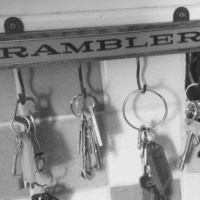
I chose Rambler Estate (car badge) – which I now use as a key holder – because …

… It represents my 18 months as a caseworker in an American social work agency in the 1970s – and all the challenges and hard learning from that period. The Rambler Estate was my car.

Having been a generic social worker for a couple of years, I wanted the opportunity to have a more specialised role and so I answered an advertisement in Social Work Today for a caseworker for the Children’s Aid Society of Pennsylvania, an agency specialising in fostering and adoption. I was interviewed in England by the Director and offered the job; and a few weeks later was coping with the heat and humidity of late summer in Philadelphia.

It was not only the climate that I had to adjust to but an agency with a very different approach to the one I was used to back in England. The agency was a mixture of authoritarianism and over-protective control, all underpinned by strong psychodynamic theories. It was here I found myself confronted by issues of race and diversity in ways I had not experienced in rural Worcestershire in the early 1970’s. I came to realise over the next twelve months that the values of the agency I was now working for clashed with my own dawning understanding of equality and rights.

I returned to England after a year and a half. Did I have regrets? No, it was one of the most interesting and challenging times of my life where I learned to be much more questioning of my role as a social worker and the impact of social work on individuals’ lives. I became more self-reliant and I made lasting friendships.