Candle

J O R U N E   V Y S N I A U S K Y T E – R I M K I E N E

57 Jorune    DSC01665 (1)

I came to social work not very much knowing what it is, but feeling that it is my field. In Lithuania before my studies started social work did not exist, we were one of the first to study this very new field in the country. I loved my studies from the first moment – as I was caught deeply by its main meaning – to take care about vulnerable groups of people, to stand for their rights, to empower them to change their discouraging life situations. Almost 10 years I spent in social work practice – being the social worker in a school, working in several NGOs with youth groups and communities. Later, feeling the lack of knowledge I came back to university. For 12 years I am teaching in the social work department in Vytautas Magnus University in Kaunas, but at the same time I am working in the field as groupworker (with adolescents and parents) and giving training to colleagues and practitioners. At the end of 2015 I became a vice-dean of the social sciences faculty at Vytautas Magnus university.


I chose Candle because …

… It is as a symbol that contains one of the meanings I think social work has – brings hope and light to a person’s life. As Candle, a social worker provides more light to situations that seem discouraging. It can be compared to situation when you sit in a dark room and cannot see anything around till somebody brings in the lighted candle. When people have ‘dark times’ and different crises in their lives often everything can seem so pessimistic without any possible solutions, but social workers bring in the light and help people to look around and notice the possibility that there are so many different ways to see yourself, your family and the world.

Candle has many meanings of hope and light for me. When you are stuck in a tunnel a candle helps you find out your way out. Candle is lightening not only the outside but the inside world as well. You can be lost in your ‘inner tunnel’ and the candle light gives you hope, to see the light and strength in your own soul and mind. And that life can be changed.

Social workers provide a candle to others person to lighten their lives.

Let’s remember to lighten it for our own ‘rooms’, too.

Glasses

   K A R E N   H E Y C O X

Karen Heycox   56 Glasses

I wanted to be a social worker from the age of twelve, even though I did not then know what it was called. I just knew I had concerns about social justice particularly around race issues … concerns around gender and class came later in my twenties as my life experiences expanded and at an age when I could reflect more on my working class background and also share common stories with women friends.

After high school I studied social work at the University of New South Wales in Sydney, Australia. Upon graduation I worked for eight years in a large teaching hospital in neurology and neurosurgery as well as a number of other areas. Realising the restrictions of this work setting I was glad to have the opportunity to move on to work in community health with a range of people experiencing physical disabilities. My passion for working with older people and concern for advocating for their rights led me to a position lecturing at the University of New South Wales for almost twenty five years … teaching an elective on working with older people, as well as teaching in practice areas in both classroom courses and in field courses.

I have been retired from social work for almost five years. Since retirement I have developed an online communication course and have done some teaching … however I find myself at a time in life where I can use my experience to give my time and care to others in a more informal way.


I chose Glasses because …

… they have increasingly become an identifier for who I am and how I practice in the world. Each time I have purchased a new pair I am mindful of how they will represent me and my values and how they will be viewed by others. I am known for my glasses and for my way of dressing. I get positive comments and find people want to engage and use my glasses as a starting point. So while it was initially a subconscious act, I realise I now use my glasses and my overall presentation as a statement and a means to engage and be open to discussion with others.

I found that when I worked with older people they liked to talk about what I was wearing, it brought some ‘life’ into their often isolated world. Often we may think we should dress conservatively when working with older people but I found the opposite was true (of course there are limits but these apply not only to older people).

This was also true in my work with students who would see the way I presented myself, the way I decorated my office and my open door (when many academics kept theirs closed) and would comment on how it felt like being in their room at home. So there  was already an established degree of comfort. In light  of this situation I soon became the informal social work student advisor, and then in a more formal role counselling and advising students. I think this sense of individual expression is to a large degree lost in modern Western societies … and we are the poorer for it. I remember looking around a classroom and seeing the black, white and grey uniforms … also the often conservative black framed or tortoise shell glasses … so my glasses are also a plea to celebrate diversity in the world.

Court hat

   R U B Y   M A R S H A L L

Ruby Marshall   Court hat

I started my career in Social Work in the 1960’s, initially as an Almoner. Later, in 1969, I qualified as a Child Care Officer at Newcastle University, UK. I was employed as a Child Care Officer which included duties attending the local courts when I had been acting as a Gaurdian-ad-Litem in adoption cases.


I chose Court hat because …

… when attending Court, female Child Care Officers had to be ‘hatted’ or they would not be permitted to the Court. None of the Child Care Officers owned a hat, but in the Children Officers’ room was a hat which we all used when attending Court. It was known as the Court hat and had not to be removed from the Children Officers’ room except for Court duties. The hat was known as the ‘Princess Marina Hat’[1] – colour black, about three inches deep and comfortably sat on the top of one’s head!

The Children Department at that time consisted of  a Children Officer (CO), a Deputy Children Officer (DCO) and four Child Care Officers (I was one), one of whom worked part time. There were no male CCOs, but the DCO was male.

We had to work on alternative Saturday mornings, no such thing as being paid overtime, the expectation was you finished work when you were able, but not before 5.00.p.m. Tuesdays and Thursdays used to be long days: when we visited foster parents we had to see the foster father of the children fostered and at that time the local shipyards and engeneering works used to work overtime until 8.00.p.m. Foster parent visits could easily last until 10.00.p.m. – but you had to be in the Office by 8.30.a.m. the following day – no consessions, just expectations! Our caseloads were quite heavy – I had 70+ cases. Home Office Inspectors used to ring the CO at approximately 4.00.p.m. to say they were carrying out an Inspection the following morning, when they would “pull in” a selection of cases which they chose to examine.

We got used to the mandatory Court hat and just accepted the fact one had to wear it. One CCO absolutely hated it, but the other three of us just accepted the fact, we had to wear it – no discussion whatsoever.

[1] Interestingly, there’s a song by The Kinks (a British pop band) – “She’s Bought a Hat like Princess Marina”!

Ileke ibile

   E N A K E L E   S E U N   D A V I D

54 Enakele Seun David  54 Traditional bead

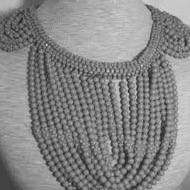
I grew up in a small village in Nigeria.  Ileke ibile (Yourba for traditional bead) is a symbol of power and caring for others; it shows the majesty of the Head of a village in Nigeria, the person wearing the bead. It simply shows a traditional ruler, such as king, queen, elders in the village or chiefs. As a young boy, I loved the traditional bead and I always wished to wear it because of the passion the Village Head has towards the villagers when there are challenges.

Currently, I am a graduate of social work from Vytautas Magnus University at Kaunas in Lithuania.


I chose Ileke ibile (Traditional bead) because …

… Social services is not a new phenomenon in Nigeria – the traditional rulers provide social welfare services through the elders, family heads, age groups head, among others. The traditional rulers are responsible for the maintenance of discipline and settlement of disputes in the community and offer rewards where appropriate. Even more, they provide food for the poor, help the homeless and adopt children without families, as well make sure there is peace and harmony in the community. The communities are highly structured to handle cases of deviance.

Minor disputes are usually settled by family heads while serious cases are referred to the village heads or the traditional rulers for settlement. The kinship system in the traditional Nigerian society provides for family welfare, child welfare, health issues, mental health, and care for aged and makes available recreation services.

Finally, the traditional leaders meet the social needs of the villagers and also deal with problematic behaviors in the village and find solutions at all cost. Today, I see social workers wearing the ‘Traditional bead’, one which cannot be physically seen or observed. However, the social work profession is the Traditional bead.


Jewellery

   M A R I L Y N   B E N N E T T   and   the   J E W E L L E R Y   P R O J E C T

53 Jewellery1

53 Jewellery2 53 Jewellery3

53 Jewellery4 53 Jewellery5  53 Jewellery6

We found the 40 Objects project really interesting and the concept is motivating and fun – the group I supported to participate really enjoyed it. It was interesting how the “object“ enabled people to explain what social work meant to them.

Objects support people’s understanding of situations which otherwise they may find a difficult concept, help them to share views and opinions and this empowers individuals in their day to day lives.

Using this concept people were enabled to share with us what social work day services meant to them.

“I like selling our jewellery in the community and being with my friends” – Josephine

“I love making bangles and seeing what they are like once they are finished, and I like spending time with all my friends” – Mary

“Working with friends and other people, being happy. We feel proud. I really enjoy it” – Ruth

“Love taking part in things, enjoy the group” – Margaret

“Being able to make things that are personal I can share as gifts” – Nicola


We have chosen Jewellery because …

… it represents the fun and enjoyment we have shared within Day Services for people with a learning disability for so many years and symbolises social work to us.

What our Jewellery Workshop and Social Work Day Services means for us:-

Friendship – we have attended social work day services for a lot of years, some of us for 40+ years. We have been supported by day services to maintain our friendships despite the changes of location and buildings and to this day we remain friends enjoying a range of different activities and experiences together.

Community – our Jewellery Workshop takes us out and about in the community meeting and engaging with others as well as strengthening our sense of citizenship and being able to contribute within the community.

Health and wellbeing – the workshop and friendships have supported our sense of wellbeing; we have lots of fun together which makes us feel good.

Skills – Our Jewellery Workshop offers us the opportunity to learn new skills, and we now sell the things we make at Open Days, other parts of social work, colleges and NHS within East Ayrshire. What we sell funds the continuation of the project. We also like being able to gift the things we make to our friends and family.


We would like to thank the social work day service staff, who have supported us and especially Sandra Wason who started the group with us and has now retired.

Submitted on behalf of the Jewellery Project by Marilyn Bennett, Service Co-ordinator

Day Opportunities North, Balmoral Road Resource Centre. E-mail: marlyn.bennett@east-ayrshire.gov.uk

Delegate button

C A R O L   S.   C O H E N

52 Carol S Cohen   52 Delegate button

I returned home to New York after receiving my MSW degree from Virginia Commonwealth University in 1974, and obtained a position as a “street worker” with youth. Deciding that I wanted a roof over my head, I found a better fit as the Group Work Supervisor at the Williamsurg/Greenpoint Human Service Center of Catholic Charities in Brooklyn. I later became Program Manager there, which brought me into the community coalition that made my object – the ‘COCO’ delegate button. After seventeen years with the agency in a variety of programs, and then moving into my academic career and current position with Adelphi University, I now serve on the Board of Directors of Catholic Charities Neighborhood Services.


I chose this Delegate button (badge) because …

… It comes from a large scale community organizing project called COCO (Coalition of Community Organizations) that I participated in during 1977-78 in Brooklyn, New York. This button is iconic to me, and the story behind it follows.

It was a time when our community-based office of Catholic Charities (on the ground floor of a former convent) was working with the full range of social work services. Our program integrated individual and family advocacy, counseling and case management, groups and programs of many types with many populations, grass roots community organizing and large scale collaboration. There were big lessons from this experience about the depth and breadth of social work – and all the threads that tie our profession together. Also, it speaks to all the amazing communities that participated in the organizing effort.

The linked geographic area of Wiliamsburg and Greenpoint in the late 1970’s was experiencing widespread “red-lining” (abandonment by banking and other institutions to support housing) and planned shrinkage (a policy to allow some communities to wither and require less municipal services). In these days before hipsters and extensive gentrification, there were intensive community development activities in communities often identified by ethnicity, religion and race. At least six regions/constituencies had distinct identities and goals, living in contiguous neighborhoods, Polish and Irish in Greenpoint; Latino, Black, Italian, and Orthodox (Hasidic) Jewish in Williamsburg. We had communities called the Southside, Northside, Lindsey Park, the Projects, and a host of parish and congregational names that were key identifiers to residents.

Into this mix, came the idea of building a strong area-wide coalition that could unite residents and leaders to address common purposes – a daunting task, only made possible by the intense, shared needs of residents, and important because of the inherent problems in fighting each other for an ever shrinking pool of resources.  The COCO organizers, trained in the model of Saul Alinsky and the Industrial Areas Foundation, managed the unimaginable feat of bringing all groups together in a Community Convention to determine and fight for a common agenda. This effort was sustained over a 5 year period, then diminished as the New York City political structure and directions changed. Echoes can be seen in many current leaders, community institutions, local governance, empowerment approaches, and coalitions established during this period.

For me, the greatest legacies of this were through living the “case-to-cause” imperative for social work, and the need for integrating all levels of practice (from micro to mezzo), no matter what your social work specialization. Most important, was to have the opportunity to contribute to an effort which honored and elevated the primacy of people’s needs, conditions that impact on them, and their aspirations and capacity to make change happen. I’d be negligent not to include the excitement and great joy that came from partnering with others in a cause closely allied with the fundamental, justice oriented purposes of the social work profession. It stays with me today, and this artifact brings it all back.


Violin

  N A T I A   P A R T S K H A L A D Z E

51 Natia Partskhaladze   51 Violin

Being from the country of Georgia, where social work profession has been emerging in parallel with my career since late 1990s, I had a privilege to be one of the first qualified social workers, also engaged in shaping the contours of this profession in my country. I was lucky to be able to receive academic training in several fields and work in different countries. I treasure diverse life experiences, environments and people I have met and I hope to continue being exposed to these during the rest of my professional path.


I chose Violin because …

… well, it was unexpected even for me, to think of social work as of the violin, but more I reflect on this idea, more valid it seems to me.

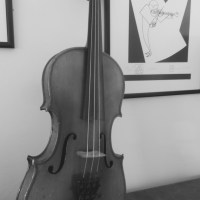
Both have an ability to be flexible in their application. Penetrating different countries and cultures, violin is an important instrument in a variety of musical genres – classical, folk, jazz, rock and roll, etc. Similarly, social work, whether applying Western or indigenous approaches is practised with diverse communities, groups and individuals of different race, age, life circumstances, strength and weaknesses.

A violin is a powerful instrument when played alone and is similarly valuable in an orchestra, when performing with a variety of other instruments. Social work can play a life-saving role on its own, but its effects are multiplied when practised in a multidisciplinary team, in coordination with other professions.

For people unaware of the mental, physical and emotional efforts they take, playing the violin and practising social work might seem very easy. However, both can be ruinous – of music or a life – when not applied by a virtuous, empathic professional who is willing to face and overcome challenges their practice might entail.

In the end, both are invented to make lives better …


Memory jar

   S U Z Y   C R O F T

99 Suzy Croft   99 Memory jar

I am proud to be part of the profession that is social work. Social workers work with people who are often at the most vulnerable time of their lives – those who may be very old and frail, have mental health problems, struggling with the effects of poverty, ill-health, substance misuse, family breakdown, unemployment and debt. Social workers also face the challenge of working with and dealing with the effects of those who are prepared to abuse others whether adults or children and they have to know how and when to take action to protect the most vulnerable and stop the abuse.

Every day social workers will be making the most complex decisions in areas where the answers are seldom black and white. They are trying to do this skilled and often complicated work in the framework of attempting to work alongside service users, supporting their rights and needs.

I hope that is what I have been able to achieve in my job as specialist palliative care social worker and Team Leader in Social Work and Bereavement at St. John’s Hospice, London.


I chose Memory jar because …

… for me it represents some of the most poignant but also the most positive moments of my work in the hospice.

As part of our Children’s Days for bereaved children, which we hold in the hospice, we ask the children to make a Memory jar. The coloured layers in the jar are made by rubbing chalk into salt and we ask the children to make a colour that represents a memory of the person in their life who has died. At the end of the session the children will then usually choose to tell each other what the colours represent and in that way they talk about the person who has died. I vividly remember one six year old Sri Lankan girl whose mum had died. She had only been in the UK for a short time and neither of her parents could speak English so she had had to do a lot of interpreting for them. During the Children’s Day she took several other children under her wing including three siblings whose mother had also died and who clearly found it very hard to talk about what had happened. In the Memory jar session this little girl took the lead and described how she had a layer of brown for the colour of her mum’s skin, pink because it was her favourite colour, green because their front door was green, and so on.

Not only are the Memory jars a useful way for us to help bereaved children but they teach us about the resilience of children and how they can and do survive with all that may happen to them. We know that children can cope with life changing events, serious illness, death and dying, if they are given the right support and it is important that nothing that is happening in the family is hidden from them. One of the most important parts of my work has been supporting families and children through such events and knowing that specialist palliative care social work as a profession has such an important role in the care of those who are dying and those who are left behind.


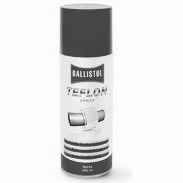
Teflon

   C H R I S S I E   E D M O N D S

Chrissie Edmonds   Teflon spray

My first volunteer job in which I stayed for more than a year was with Community Service Volunteers in a hostel in London, working with homeless young people aged 16-25. This shaped my future and propelled me into residential social work in hostels with challenging young people. They were from all walks of life that had found themselves homeless through some forced choice options. Many were young care leavers or ‘runaways’ as I found out at that time. I worked in the residential sector for some years before completing my MSW at Nottingham University, England. I worked at the Cotswold Community when 68 hour weeks were considered the norm, and seeing such extreme behaviours lead me into to setting up a criminal justice project working with young offenders with drug problems. So this project took me back into the challenging world of the secure estate, young offenders institutes, secure units, and male and female prisons. I also worked in the fostering and adoption sector with difficult to place young people and treatment services for those with complex addictions.

My journey through the voluntary sector has allowed me into a different realm of shaping social work experience through education, as I am currently a Senior Lecturer at Sheffield Hallam University and an Independent Practice Educator.


I chose Teflon because …

… My father is a chemist and has been for 50 years and therefore perhaps this explains my choice in choosing a Teflon coating spray made up of various compounds. My father sparked my curiosity in substances through my childhood; as a locum pharmacist, the garage was full of Victorian style bottles of chemicals. To this day, I am not sure whether they were all legitimately there but it did not matter to me as he made explosions in the garden: the highlight of the year always being fireworks night, say no more. This definitely fuelled my interest into the volatility of substances which I think now must have influenced my journey into working within substance misuse. In the 1960s Dr. Roy Plunkett discovered Teflon. Its four properties are:

  1. Very low coefficient of friction
  2. Highly inert
  3. High melting point
  4. Wonderful electrical properties

Teflon is almost unbreakable.

1 Very low coefficient of friction – not allowing people to get you too agitated

I think my Teflon coating was first established when I did my placements in a Category B (medium security) male prison, horrified by the extreme brutality present there amongst prisoners as I was allowed to walk amongst the maze of lived-in experience within the walls. Being a female social work trainee I was asked at age 25 if I had come to the prison placement to look for a boyfriend, Teflon coating quickly sprayed on, I couldn’t say any more.

2 Highly inert – not reactive as such

I also worked at a ‘Category D’ (low security) open prison and was asked to work with lifers, with a sense of terror and fear they left me with the most fascinating and complex 27 year old who was detained as a sixteen year old after a sinister prank to get the attention of his mum, ending with tragic consequences. I realised that Teflon coating was also useful when completing groupwork with male armed robbers, but soon realised that they were able to definitely find the inner damaged child and we were really picking up the pieces of their imitation Teflon coating.

3 High melting point – takes a considerable time to melt down

It may be that I have kept the coating on for a long time and, as stated, it has served me well up until this point; however, the other properties of Teflon are relevant to me. I have not been too ruffled by offenders with serious offences and baffling histories. I have not risen to provocation even when put to extreme tests in residential settings with residents trying to jump out of windows and barricading themselves in their rooms for protection.

4 Wonderful electrical properties – can get lively and generate ideas, like a live wire

I hope that my humour and wit, the wonderful electrical properties of Teflon, have kept me on the ground and allowed me to be creative. I have always been able to think on my feet and come up with creative solutions to entrenched problems. However, a note of caution with this object was raised recently by a very insightful student who said do you think that perhaps sometimes this coating and, indeed, your experiences in harsh environments can allow the subtlety to get missed? In suggesting this and causing me to reflect on this coating, it may be time for mine to wear off completely, or a conscious dissolving in another solution. This may be problematic, though, for as I have stated, ‘Teflon is almost unbreakable’. What the wearing of Teflon has done for me has allowed others to not appear too shocking to me and in time, like those armed robbers in the group, peel off their coating and see what lies beneath.


Cork

   R A C H E A L   J O H N S T O N

99 Rachel Johnston   99 Cork

I am a third year social work student at the University of Pretoria situated in beautiful South Africa. Social work was not my first choice of study, but after I started with social work there was no looking back. Social work ignited a passion within me, as fast as champagne pushes a piece of cork out of a bottle. I am happy to add that I am a tutor for first and second year students that have social work as a module.


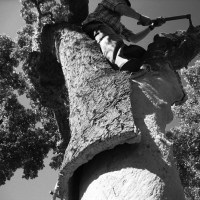
I chose Cork as a metaphor for social work because …

  1. Cork can be used as a fishing bobber: Social workers help the clients to realise what it is that is dragging them down.
  2. Corks come in all shapes and sizes: Individual, group and community work as well as our client system.
  3. Different wines (expensive and inexpensive) make use of corks: Diversity in the client system; and social workers are part of a multi-professional team.
  4. Cork pin-up boards are used to give information: Social workers make people aware of available resources and contact information.
  5. Cork is sustainable as they only use the bark on the outside of the tree to make cork and these trees are never cut down: Social workers help clients from being dependent to becoming independent.
  6. Cork is feathery: Social work’s main goal is to improve the client’s quality of life.
  7. Cork is used as insulation: Warmth and unconditional positive regard.
  8. Used to dampen sounds: Social workers serve as a soundboard to the client and listens to what the client has to say.
  9. Cork stamps: Social work is about thinking outside the box, being creative and being innovative.
  10. Cork is used in laboratories to prevent gas leaks: Confidentiality.