Balance scales

  J I L L I A N   A N D E R S O N

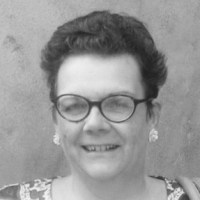
37 Jill Anderson     37 Balance scales

I have been a qualified social worker for approximately 6 ½ years, but working in social work since 1992 under various guises. I entered into social work initially as a clerical worker and as time moved on and my interest in supporting others increased. I decided to undertake the social work BA (Hons) qualification through the Open University and I’m proud to say I am one of Argyll and Bute (Scotland) Council’s ‘Grow Your Own’ social workers. The driving force for me to become a social worker was that I felt I had and still have something to offer in empowering people to make positive changes in their lives when they were at a point of crisis or change.


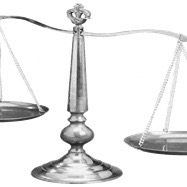
I chose Balance scales because …

… it represents what I do in my job, i.e. balancing everything going on within my caseload and trying to keep it balanced. Also the work that I do with the children and families is balanced and proportionate in respect of the circumstances that brought them through our doors. This not only relates to the interventions and supports we offer but when writing reports for various reasons, the reports are also balanced.

Blackboard

  H I L D A   B A A R – K O O I J

Mark Hilda in hats    Blackboard

I came to social work by accident or …. by nature.

In the 1980’s I went to Teacher Training College where I grew up as a teacher with the ideas of Dewey, Freire, Illich and others. Their ideas helped me to define what kind of pedagogue I wanted to be.

In my years in education I witnessed how education turned into a business-like organisation with targets, goals, mission and vision, educational outcomes and international league tables. Instead of helping children to find their goal in life, making them capable to achieve their life tasks independently, education became a process of efficient and effective instructing towards the right answers. More and more I started to feel a maverick with my beliefs until a dear friend and social worker pushed me to attend a social groupwork camp. There I realised that, although trained as a teacher, at heart I was a social worker.


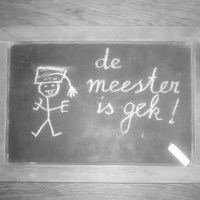
I chose Blackboard because …

… for me this symbolises the gap as well as the link between education and social work. Although there is education in social work, at present there is far too little social work in education. The word education derives from the Latin words educere (stretching and leading away from ignorance) and educare (growing and raising), (Veen et al., 1997). The pedagogue is the one leading the process of learning and growing, leading the learner away from ignorance into the world. Today, teachers have become instructors with inevitable consequences for the social development of children whereas social workers, skilled to facilitate learning processes, turned pedagogy into an art. At present many social workers in schools have to repair the damages of education. For me the true pedagogue is a mixture of social worker and teacher.

At present I help teachers to implement social work skills and knowledge into their daily practice, making them aware of the difference between instructing and facilitating learning. A wonderful journey in which teachers have to “change religion”: learning is not the result of teaching but occurs when there is a desire to know, understand or master something.

“When I saw the expression on their faces I was shocked to realise that I had never allowed them to learn. It was always me who steered, prompted, helped because that is what teachers do, don’t they? This was their own achievement. They were so proud”! (Statement by a teacher).

Chinese bowl

 T U C K – C H E E   P H U N G

35 Tuck-Chee Phung    31a Chinese bowl

I came originally from Malaysia. I received my tertiary education in Malaysia, the USA and in Scotland. I studied Fine Arts and History of Art; and when I completed my Ph.D I worked as an artist with day patients in a hospital in Aberdeen. I experienced, and still do, a sense of satisfaction when working with people. My experience working in the hospital led me to train as a social worker in the 1980s. In the late 1990s and 2000s, I trained as a person-centred counsellor and counselling supervisor. I currently lecture in social work in Robert Gordon University in Scotland, and continue to counsel and supervise.


I chose Chinese bowl because …

… it reminds me of my identity as a first generation immigrant living in Britain. The sense of being alien is what I will always carry with me; and I value working cross-culturally as it enables me to bridge the cultural divide. In social work this gives me a valued perspective of what it feels to be an “outsider” as often the many service users I work with are also “outsiders” in their own culture, marginalised by social exclusion. For me, understanding and knowing the language of alienation is a gift in social work.

The bowl I have chosen was handed down through my family; it is a green bowl with horses. It has been broken, and mended. Perhaps this breaking and mending has resonance with social work, too.


Walking stick

 N I C O L E   L I E B E N B E R G

34 Nicole Liebenberg   34 Walking stick  34 Walking stick – Version 2

I am a student social worker from the University of Pretoria in South Africa. I admire social work because it has a very hands-on and practical approach to helping people and this is one of the reasons why I chose to study it. Social work has quickly become my greatest passion.

I have chosen Walking stick because …

… Social Work is like a walking stick that aids people on parts of their life journey when they have been injured by other people, circumstances or their past. The walking stick is meant to support these people and walk this segment of their journey with them. The walking stick aids the injured person by helping them to take the pressure off their injury so it can heal. Once the person has healed the walking stick is no longer needed and the person can continue on their life’s journey alone.

The walking sticks in the photograph have no personal connection to me, but I loved the fact that they looked sturdy and imperfect and I just felt those walking sticks represent social workers. We do not try and be better than our clients we are aware that we too are only human and thus we promote equality between us and our clients.

Kete

    L I Z   B E D D O E

33 Liz Beddoe   33 Kete

The idea of a career in social work had not entered my mind when I finished my sociology degree in my early twenties. I was keen to find a social research job. I was interviewed for a junior research role in a private research company. The owner said my results from their employment questionnaire meant I was too much a soft leftie and would not be of use to his business. Instead I should try social work. A seed was sown. The next job I applied for was to be a social worker in an older adults’ inpatient service. I had worked in a rest home while studying and enjoyed working with our elders. I got the job and loved it. I went on to complete my MA in social work and worked in health social work for 14 years. At one point there was a fork in the road and I could have gone on into a management career. But my desire to pursue research had not diminished. I joined academia in 1995 and have never left.

A kete is a “… basket of knowledge of aroha [love], peace and the arts and crafts which benefit the Earth and all living things … This basket relates to knowledge acquired through careful observation of the environment. It is also the basket of ritual, of literature, philosophy and is sometimes regarded as the basket of the humanities”.[i] A kete is a woven bag made of flax.


I have chosen a kete because …

… for me it symbolises the receptacle for the knowledge, skills and values that are essential for social work. Each social worker needs a kete to carry around on their daily work with people. From their kete they can draw skills and knowledge of resources but they can also seek what they need to restore and replenish their most important tool: they can dip into their kete and ask ‘who am I’, ‘what do I need to do this job well’, ‘who are my allies in this journey for social justice and how can I support them’? The kete provides constant refreshment.

[i]  Te Aka Online Māori Dictionary, Pearson. http://maoridictionary.co.nz/word/2581

Bard on a brick

   R A Y   J O N E S

32 Ray Jones   32 Bard on a brick

My first job post-school was assistant warden in a combined mental health and learning disability hostel for men discharged from a county asylum. As a social work student I had a placement in this Victorian hospital of dark endless corridors and large drab and dingy long-stay wards. It was a demoralising institution well past its sell-by date but with 1500 in-patients. Thirty years later in the 1990s as a social services director I was able to participate in the closure of the big institutions. Now I am professor of social work at Kingston University and St George’s, University of London.


I chose Bard on a brick because …

it was a corner stone of a workhouse which became a community hospital with ‘geriatric wards’ offering no privacy or dignity. I was involved in its closure and replacement by a primary and community health and social care centre and a care home with single en-suite rooms. I kept the stone as a memory of how social workers with others closed the big institutions and created a better future for those needing assistance. Now it is in my garden as part of the ‘bard on a brick’!

Tamada

  I A G O   K A C H K A C H I S H V I L I

31 Iago Kachkachishvili        31 Tamada

My basic university education goes back to Philosophy and my first PhD thesis (‘Peculiarities of Intuitive Knowledge’, 1991) was based on Philosophy of Life theories. Due to practical reasons (getting a job!) I started my first job at the Department of Sociology of Tbilisi State University. Accordingly, I was ‘forced’ to switch to the study of social problems and different social theoretical paradigms. At the beginning, such a shift seemed to my philosophical reason (mind) as kind of dehumanisation, though very soon I discovered that with sociology and study of social problems I became closer to everyday life of different social groups in society and to myself … Then our Department started developing social work programmes (with support of EU) and my interest has been distributed to narrower problems related to various vulnerable groups. And It became clear to me that these two disciplines – sociology and social work – can go together very well in terms of sharing methodological instruments and analytical frameworks. Hence, for around 10 years I am facing the charm of this collaboration.


I chose Tamada because …

… in many respects, it reminds me of a person having status of social worker.

Who is ‘Tamada’? He is a person who leads the so-called ‘Supra’ – a formalised festive meal (banquet). ‘Supra’ is an essential part of Georgian tradition, always accompanied by the ritual of making toasts by a toastmaster, who is the ‘Tamada’. Such festive meals can be organised around weddings, birthdays, funerals, certain anniversaries, etc. Toasts are a kind of structural unit of ‘Supra’, and ‘Tamada’ serves as the driving force of this living structure. It can be said that ‘Tamada’ is an informal profession and repeated practices (performances) of toast-making for different occasions have established the institution of ‘toastmastering’.

According to the nature of specific events (for instance, wedding, funerals, etc.), ‘Tamada’ has to follow a more or less rigid order of toasts: some topics are obligatory (like a toast to the parents or those who passed away in the family), and some toasts cannot be performed prior to others. As a rule, the initiator of the toasts is ‘Tamada’ and each toast should be shared and expanded by other members of ‘Supra’. In this ritual it is not accepted to drink alcohol without relating it to a toast, i.e. to the particular topic directed by ‘Tamada’. It should be mentioned also that particular artefacts such as drinking-horns and other ritual drinking-vessels are used.

Features of ‘Tamada’ which make him similar to social worker:

  • ‘Tamada’ is not a pure ruler (dictator); he is rather a moderator, making initiatives (‘toasts’), preventing tension and conflicts, addressing issues from one participant to another, etc.
  • ‘Tamada’ intervenes in cases where a conflict emerges among participants.
  • ‘Tamada’ is a leader, whose obligation is to give the right (positive) direction to an event; he becomes a kind of a pattern, which is considered valuable enough to be followed.
  • ‘Tamada’ should be a qualified, skilful person (he has to be a charismatic personality, communicative, expressing himself in a convincing way, be logical and creative, accomplish a therapy function to those who are alienated and feel like strangers).
  • ‘Tamada’ has to be a dilettante (in a positive way); that means that he has to have certain knowledge in different directions (history, poetry, literature, etc.), like social worker who should be a bit of everything – psychologist, lawyer, physician, sociologist, etc.
  • ‘Tamada’ should follow the event (case) up to the end, he does not have a right to escape.

Features of ‘Tamada’ which make him different to social worker:

  • ‘Tamada’ is an exclusively male profession (with some rare exceptions)
  • ‘Tamada’ performs with everybody and does not focus on vulnerable people.
  • ‘Tamada’ is an actor who can play (accomplish) a role, without ‘living’ in this role, whereas social worker should not become an ‘outsider’ of what he/she does. (Simply saying: a bad person can be a good ‘Tamada’, though never a good social worker).


Grey blanket

    A N N E   H O L L O W S

30 Grey blanket  Version 2

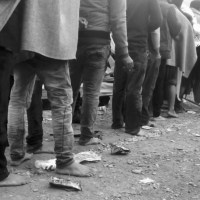
I chose Grey blanket because …

… The picture shows a line of refugees[1], rescued from the sea off Lesbos. They are queuing for warm, dry clothes and food before registering as refugees at the nearby UNHCR camp. Around their bare feet lie the detritus of instant comfort – empty cups of chai, wrappers from a batch of donated chocolate croissants. From there they hope to travel north by ferry, bus, on foot and by train to Germany or Sweden. You will observe that they are barefoot and under the UNHCR grey blankets they have wet trousers from wading through the sea. Their faces are not in the picture, deliberately, because they are just a few of the nameless people desperately trying to build a new life.

Blankets feature in humanitarian work with all ages as a source of warmth and comfort. Babies are swaddled in them; children are tucked in beside adults in them and adults are swathed in them when they have nothing else. ‘But’, I hear you say, ‘what has this to do with social work?’ You would be quite correct that in many countries, social work has little immediate connection with the humanitarian crises that fill the pages of our newspapers and for those who have worked in these situations however briefly, haunt our dreams. Social workers have become established as bureau professionals, dealing with individual problems rather than on the front line of response to urgent community crisis. And yet…

There was a time, when I became a social worker in the early 1970’s, when people entered social work with a passionate personal and political commitment to change the world. A study over 30 years ago in Australia by my late friend and colleague, Len Dalgleish and others, demonstrated that a key motivation of student social workers was to make a difference at the point of need. This was not a false assumption. It would be appropriate, writing from Sheffield, to remember that at the time of the Hillsborough disaster many local social workers played a key role in working with survivors and relatives as well as supporting families in the longer term. Indeed for the first 20 years of my career, social work straddled work with individuals alongside community development activities. But somewhere between then and now, the idea of social work in the UK being at the forefront of, for example, the refugee crisis is far from obvious. It is easy to find a host of explanations – professionalization; defensiveness; the inexorable individual psycho-pathologising of child protection to name but three; it is more difficult to work out the mechanisms that have allowed this to happen. The concept of ‘re-claiming social work’ has turned out to be both specific and limited; certainly not a return to real engagement with local, national and geo-political challenges.

The idealism and beliefs are nonetheless still around.  Social workers, both current and retired, are a significant group in the volunteer force that contributes to work with refugees on the Greek islands and mainland, though all agree that this is not ‘social work’ as it is presently constructed in most countries. I wonder if we will ever return to a time when the personal and the professional are indeed political?

[1] Most of the refugees I met were families with children but the men queued separately for clothes from the women and children. We had a clear policy of not taking recognizable pictures of women and, especially, of children. This therefore should avoid the myth that most of the refugees are men, which this photo could inadvertently promote.

Dalek

    J I L L   P A L M E R

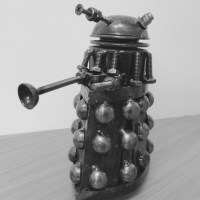
29 Jill Palmer   29 Dalek

I began my working life as a nurse. After a diversion by way of managing a music shop I became homecare coordinator for the London Borough of Croydon, in the days before it was outsourced. I then became a care manager in Croydon’s physical disabilities team. Croydon funded me to achieve my DipSW; I’m now a social worker. I moved to Yorkshire in 2006, and now work for Doncaster Metropolitan Borough Council.

I have had a varied career; I have also worked as a hospital social worker, in a mental health team, an adults community team, HiV social worker and currently with disabled prisoners.


I chose Dalek because …

… to me it exemplifies the Social Model of Disability, or for the layman If You Get the Environment Right it Minimizes the Problems.

The biggest problem we face in our prisons is that most are not adapted for disabled people; the cell doors are too narrow for wheelchairs, there are no accessible showers, it can be difficult to get grab rails or a raised toilet seat, and there are stairs EVERYWHERE with no lifts. Hence the Dalek[1]. It also epitomizes the frustrations – of the job, of still having to have these arguments, of the Care Act being introduced with no thought about what adaptations are needed to prisons, of working with people who “don’t agree with disabled prisoners getting special treatment”.

[1] A Dalek is a creation from the BBC science fiction programme, Dr Who. All-powerful though this monster is, in the classic series it couldn’t go up stairs – so escape was relatively easy if you weren’t in a bungalow! (In the modern Dr Who series the Daleks can now levitate.)

Anchor

      P A U L   J O H N S O N 
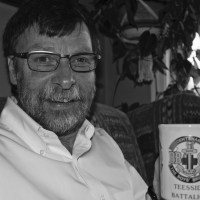
28 Paul Johnson    28 Anchor

In 1986, I completed my social work education in England and decided to move to the United States. The first social work position I obtained in America was with United Cerebral Palsy of New York State where I worked at a 52 bed intermediate care facility located on Castle Hill Ave in the Bronx. After working there for two years, I obtained a position at Jewish Child Care Association, where I was a social worker primarily responsible for two Agency Owned Groups Homes comprised of 16 adolescents in total, located in Brooklyn.

In 1992, I was admitted into the Doctoral Program at Yeshiva University’s Wurzweiler School of Social Work. In 1996, I completed my doctoral studies and was fortunate to obtain a position at Lehman College where I was an Instructor and later an Assistant Professor. In 1999, I accepted a position at the University of Southern Maine’s School of Social Work, where I have been for the past 17 years. Initially, I was an Assistant Professor. In 2005 I was granted tenure and then promoted to an Associate Professor; and in February 2016, I was promoted to the rank of Full Professor.


I chose an Anchor because …

When I was a boy, I was a member of the Boy’s Brigade. Their emblem is an Anchor with the Moto: “Sure & Steadfast.” In my career in social work, which I can’t believe began 30 years ago, I have found many situations to be complex and challenging. Frequently, one is pulled in numerous directions and there are no right or wrong answers. Often, one is second guessed or even criticized.

In each of the settings that I have worked in, I have often found myself in the role of advocate for those who are perceived by many to be undeserving. For example, in my work at United Cerebral Palsy, I would often find myself in meetings with the psychiatrist advocating that a resident’s medication should be reduced; and when I worked at Jewish Child Care Association, going to family court and arguing that an ‘Open Adoption” would be beneficial to all.

At the University of Southern Maine, I have been on the Faculty Senate for the past 15 years and last year was elected to be Vice-President of the Senate. For the past two years, I have been the Grievance Representative on my Campus for the Associated Faculties of the Universities of Maine (AFUM). Over the past two years, we have had a number of faculty members retrenched and this ultimately ended up going to arbitration. Again, my role was to advocate, utilizing the Collective Bargaining Agreement, for the faculty that were impacted by these decisions.

Over the years I have come to the realization that all one can do is one’s best. As one of my student’s commented to me last semester: “Paul, if they are giving you a hard time, then you must be doing something right.”

I have my Boy’s Brigade mug, which was given to me back in 1983, on my desk and often think about the waves on a stormy winter’s night crashing against the rocks at the Hook Head in Ireland. Just like it states on the anchor, one needs to remain “Sure & Steadfast.” Never underestimate yourself. Never be too harsh on yourself. Never doubt yourself. As the Boy’s Brigade hymn states:

  Will your anchor hold in the storms of life?

   When the clouds unfold their wings of strife?

   When the strong tides lift and the cables strain,

   Will your anchor drift, or firm remain?