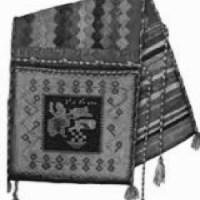
School bag

L U D O V I C   B A R I L L O T

4   83 School bag

I am an educateur, a member of the family of social work professions. I am French, living in Barbezieux, and for fourteen years I lived and worked on the Ile de Réunion in the Indian Ocean where I created a volunteer association, Arts et Traditions. This has the aim to develop the potential of disadvantaged people who are in need through the production of domestic crafts (such as curtains, bags, drumsticks, table settings, etc.) They could do this with no financial assistance.

I chose School bag because …

… it reminds me of my motivation as an educateur. It has always been to help people in need and their families to rediscover their balance, energy, pride and dignity, in order to regain a rightful place in society. My son wore this school bag every day to school in Réunion and he still has the bag to this day. It was made within the Arts et Traditions association.

The work of an educateur (socio-educational action) is both with individual young people and their families and also to be a part of the social whole. Learning the Creole language helped that process.

Culturally speaking, when I arrived in Ile de Réunion in 1970 I sensed a culturally degraded situation, a society of Planters in an old colony but changing and aspiring to Western-style life-style. Whatever one’s place in this society it felt devalued and not self-reliant. There was massive importation from France and an economic monoculture of sugar, resulting in under-employment and huge unemployment and lack of professional qualifications.

Socially speaking, large sections of the population desired change: to live differently, and earn an income from an activity. And politically speaking, the scale of the needs led elected officials to favour the development of basic infrastructure (schools, hospitals, housing, roads, etc.)

It is in this context that Arts et Traditions was created to develop production of small domestic crafts requiring traditional know-how and to develop this production through exhibitions and the like, to create income for the creators.

The membership grew quickly and the status of families in difficulty strengthened markedly as they became authors of their own destiny. There developed a strong and growing demand for these hand-made products from Réunion and an opening of new relationships (with others and with traditional culture) amongst people in need.

Income derived directly from their activities in arts and crafts allowed home improvements and electrical equipment, opening of bank accounts and the other kinds of social and economic activities that help people feel part of the broader society. The social workers involved were seen both as community activists without losing their ‘original’ role as social and educational action professionals.

Arts et Traditions has now over 40 years of existence. Craft production has diversified and exhibitions are well-received. The poorest families testify that it is “life changing”.

Ice lolly

 R I C H A R D   B A R T H O L O M E W

86 Richard Bartholomew   86 Lolly

In 1975 I became an unqualified social worker in the South Wales valleys. Within a couple of months I did Emergency Duty – and had had no training for Emergency Duty.


I chose Ice lolly because …

… I was asked on a Saturday afternoon to go and see a couple who were having another domestic argument. The last time a social worker had gone out to them, the social worker had been given a commendation for having put their thumb between the hammer and cartridge of a shotgun as the trigger was pulled.

I decided the best way that I could be ‘unthreatening’ was to arrive licking an ice-lolly, and in the end only had to disarm one of them trying to stab the other with a knife.

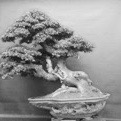
Bonsai

N I N O   Z G A N E C

85 Nino Zganec  85 Bonsai

I came to social work rather unprepared. In fact when I was 18, at the age when a decision about my further education had to be made, I knew only one person who was a social worker. But he was a rather strong person and I think this was an important fact. My studies passed fast, but immediately after finishing them, war began in my country, Croatia. I started to work at the faculty as a young researcher and was very actively included in work with the children victims of war, with refugees and other people who suffered from war circumstances. Afterwards I spent five years in politics as assistant minister and state secretary responsible for the social care system. This was a huge experience, professional enrichment but also a time of many frustrations. Politics is always frustrating. Nowadays I am again in the academic community and enjoy my work with the students and my fellow social work teachers. A very important part of my current career is related to international activities.


I chose Bonsai because …

… There is something magical between Bonsai and social work. The purposes of Bonsai are primarily contemplation (for the viewer) and the pleasant exercise of effort and ingenuity (for the grower). The process of forming and growing of Bonsai needs much more than just horticultural skills. Much emphasis should be placed on the artistic preferences of the breeders. The basic principle is to breed a miniature tree that has all the characteristics and plant species in the “normal” size in nature. Once the bonsai is formed it contains all the characteristics of a big, strong, beautiful and complete plant.

My understanding of social work strongly coincides with the idea of Bonsai. Such a miniature and young science discipline contains all most important characteristics of so-called big and old sciences. But social work is also a kind of artistic practice which is formed by social work ‘breeders’. It perfectly serves for contemplation as an act of considering with attention.

In its gentle existence social work provides a strong contribution to the prevention of human suffering, the development of human capabilities and a kind of creative design for a sense of life in general.

As there are hundreds of types of Bonsai, so there are hundreds of types of social work practice. The real meaning of social work is in the “eyes of the beholder” and the true definition of social work could be that social work is just what we make of it.

I should add that Bonsai also represents a kind of “art of the possible“ that strongly depends on the ability of the grower to transfer their vision into reality. My experience in social work, especially during my time in political office, showed me that social work coincides with Bismarck’s definitions of “politics as the art of the possible, the attainable – the art of the next best.” Social work should be engaged, change-oriented, political and ambitious, having always in mind that this kind of science and art must be possible, must be able to make the “next best”.

Car jack, lug wrench

 M O K G A E T J I E   M A N G A N A

84 Mokgaetjie Mangana   84 Car jack  84 Lug wrench

I am a 21-year-old 3rd year social work student at the University of Pretoria, South Africa. I’m originally from a township referred to as Soshanguve, but currently residing in Hatfield. I have chosen to study social work because it is a profession that not only changes the lives of people but ensures that the very same people are able to become self-sustainable, and more than able to stand on their own two feet even after the social worker has left. It is a profession that changes mind-sets, where – as a social worker – clients who consider you as their last hope, end up leaving your office space empowered to overcome their obstacles no matter how big or small.

Social work is a collaborative profession involving both the helper and client(s) who work together to tackle the issues at hand. It is not about the helper conducting him or herself as the all-knowing authority who looks down on clients, and this is something I truly respect about the profession. Social work encourages one to start where the client is and work at grassroots level. This profession does not box you in, because you can choose to work with individuals, groups, in communities or a little bit of everything. There is no limit to how high you can soar. It is a respectable profession, with its very own principles, values and ethics of conduct.

Apart from everything else, at the end of the day it requires you to just have love for people and a belief that they have the capacity to change their own lives. As the past two years of my studies have gone by, I have developed a deeper understanding of what the profession is really about and what it entails. With that said, I have absolutely no doubt in my mind that this is the course of study I want to continue pursuing.


I chose a car jack and lug wrench because …

Firstly, the function of a car jack is to lift vehicles so that maintenance can be performed. Social work is a profession that helps to lift clients from their current situation and works toward making a positive change in their lives so that they can function in a positive way. The maintenance of a vehicle is a process, just like working with clients is a process. Otherwise the vehicle will not be in good shape, and the same applies to clients who will leave the social worker’s space, still unable to live to their full potential. After the car jack has fulfilled its purpose, the vehicle can now function properly, on its own. After receiving help from the social worker, clients can also go out and live their lives in a positive manner.

Secondly, the function of a lug wrench is to loosen and tighten lug nuts on automobile wheels. Social work is a profession in which the values of acceptance and a non-judgmental attitude are used to help “loosen” clients so that they can be more willing to openly express their thoughts, struggles, feelings. The helping process is not about the provision of quick solutions to problems but it requires the social worker to build rapport with the client. It is impossible to help clients if you have not gained their trust, thus it is important to get to know them first so that they will allow you access into their experiential world. As mentioned before, this profession does not involve providing a quick fix to clients’ problems. This profession also “tightens” clients, making them strong enough to deal with their problems. Social work is embedded in the developmental approach, where clients are assisted by social workers to be self-sustainable and strong enough to help themselves. We sometimes need to assist them with a ‘jack’ and to help tighten or loosen the bolts – for them to be able to continue on their journey.


Umbrella

D E T E   K E L D E R

83 Dete Kelder   83 Umbrella

I am a third year social work student at the University of Pretoria, South Africa. I have a BSc degree in Genetics but unfortunately lacked the passion to pursue a postgraduate degree in this field. I then married and had my own family and this made me realise how important a person’s environment is. I realised that the environment in which a person lives shapes your life and determines a path – sometimes this can be a destructive one. I chose to study social work because I would want to be just a small little nudge in a person’s life that would put them on a different path – hopefully more positive.


I chose umbrella because …

… Social work can be described as an umbrella. Every so often people find themselves in an unforeseen or unanticipated storm. When this happens one can get overwhelmed and often go through the storm blindly just to get out of it, running away just to get out of the wet, cold and uncomfortable situation. Social work provides an umbrella – a moment of calm for the person to stand in the rain and say “wait … I can stand here for a while and explore my options”. The umbrella can be a tool you use to help you weather that storm. It provides you with a little clarity and calmness and allows you to get to shelter.

Like the umbrella, social work intervenes at a time when a person feels overwhelmed. Social workers can make a person’s journey or storm just a little more bearable until the storm has passed. The umbrella does not get rid of the storm. It is a barrier and protects the person to enable them to be calm, and walk towards a target. Without the umbrella, one could possibly take the nearest shelter just to get out of the storm – this not necessarily the best. It is a journey, sometimes short and sometimes very long. The umbrella is there to help the person to stop trying to dodge the rain drops, to open their eyes and to look at all available options. If the better shelter is farther away it is easier to take on the journey with the help of the umbrella.

You sometimes need an umbrella to protect you from the harsh elements – scorching sun, turbulent wind or thunder storms. Once these subside and conditions are more bearable, you can put away the umbrella and use again, when necessary.

School entrance sign

  V E S N A   L E S K O Š E K

82 Vesna    82 School sign

I am a social worker, pedagogue and sociologist from Ljubljana, Slovenia. My multi-professional profile is a consequence of the historical position of social work in the Slovene scientific community and that community’s narrow, positivistic view of what science is and what is not.

Social work in Slovenia (as in many other countries) was for a long time outside mainstream science and was recognised ‘only’ as an applied profession. As a consequence all social work students had to choose another discipline in order to acquire a university degree. In Slovenia there was a choice to enrol either in pedagogy or in sociology. I chose the first one, pedagogy – one of many mistakes in my life, but nothing to be done about it now!

After being a social worker in social services for 17 years I thought that it is time to do something further with my knowledge and experiences, so I completed a Masters degree in the sociology of culture (social work was still an applied science and not eligible to have MA or PhD studies). That was not enough for me; I thought I have more to say, so I finished a PhD and became a doctor of sociology. Currently I’m dean of the faculty of social work, which became a full member of the University of Ljubljana in 2004 and was finally recognised as an independent scientific discipline. What a journey that was for my older colleagues who fought the battles against all the prejudices and stereotypes about social work as a discipline.


I chose School entrance sign because …

… it reflect all those fights for social work’s academic status and the long journey from 1955, when a Higher school of social work was founded and provided a two-year study programme as an applied science – and finally becoming a Faculty of social work and an independent scientific discipline.

In 2015 we celebrated the 60th anniversary of social work education in Slovenia. At the end of the official programme one of the social work practitioners named Vili Lamovšek came to me to the stage and gave me a present. When unwrapping it in front of the guests and friends it suddenly appeared in front of us – such a well-known sign that a lot of us remembered so well. It had been there on the wall at the main entrance of the school of social workers from 1955 till the late 1980’s when we moved to another building. Vili took it from the wall and had it with him all those 25 years and he gave it to us to remember the past and celebrate it again as an important part of social work’s history in Slovenia. Again, thank you Vili from the bottom of our hearts.

Mobile phone

N I C K I   M U S G R A V E

81 Nicki Musgrave   81 Mobile phone

I began my career as a newly qualified social worker almost exactly one year ago. I had tried various vocations prior to this; freelance photography, hospitality, bar work; but it was working with young people within the voluntary sector that had ignited the spark to pursue a career in social work.

I had worked for two years for a large charity supporting young people to further their aspirations, learn new skills and build their confidence. It was immensely challenging and very rewarding. Social work felt like a natural step, to further my skills, apply theoretical frameworks, learn strategies, therapeutic approaches and models, and to continue supporting and empowering others. A social worker friend encouraged me to pursue my interest and I embarked upon the most challenging, intense, and emotional journey of my life. Last year I secured a post as a newly qualified worker within the long term (or permanence) team of a busy local authority in northwest England.

The object I’ve chosen is my mobile phone. Some (initially including me) might think this choice a little uninspiring. It’s functional, not particularly sentimental, and to anyone else it’s probably just another mobile phone. It’s old (my Mum’s), battered, and has seen better days. It sports a cracked and peeling orange case that has been endlessly picked at, chipped and fiddled with in absent-minded moments.


I chose my Mobile phone because …

 … this little nondescript piece of technology has somehow become a conduit for personal and professional development in ways that I could not have imagined at the start of my career. And who can ignore the cultural and historical significance of the mobile phone, changing the way people communicate, socialise and develop.

During the last year, I’ve felt more mixed emotions than at any other time in my life. I’ve felt excited, confident, capable, and lonely, overwhelmed, sad, and angry to name a few. I have learnt about myself, met others who inspire me, and needed time to escape. My relationships have never been more important, I reach out to those I care about when I need to.

My husband is a teacher and also works long hours, and most of our closest friends and family live over 100 miles away. There are times when I’ve felt guilty for not being more attentive, or for forgetting a birthday, and times when I absolutely do not want to leave the house but still want to hear a familiar voice. The value of a phone call, or a text message, of laughing, offloading and crying, and of a simple verbal hug can’t be measured. My trusty little phone helps me to celebrate these relationships when I can’t be there in person, it helps me to keep the people that I love close.

My professional identity is also enhanced through the digital channels of this little device. I access forums, read posts, and engage in discussions with other social workers. I feel like part of a community, that I take with me and take part in on a daily basis. I gain advice and guidance about areas of practice, read commentary and critique of policies that impact upon my role, and learn about the development of legislation or case law. I find excitement and inspiration about social work through the information available to me instantaneously and continuously, and I do feel solidarity with other professionals practising, learning or sharing their experiences across the UK and the world.

My little old mobile phone has also helped me through one of the most important lessons of my first year of practice. I’ve come to realise how important self care is, and at certain points been forced to acknowledge the need to be kind to myself. In learning about myself and my own strengths and challenges, I have found strategies that help me to survive. I know more than ever now that I need to find creative outlets (ironic, given my time spent working as a photographer). I can take pictures and share them with people around me. I’m currently working on a ‘picture a day’ project, creating a photographic documentary of personal memories for each day of the year (see my instagram account for a peek – niki.wiki). I’ve also started to draw, and sharing pictures of the pieces that I’ve done motivates me to keep learning and creating. My little phone helps me to find ways to keep in touch with the things that make me who I am, I use it to listen to music that I love while I run, follow a guided meditation, and do a yoga class when I need to wind down.

Finally, and it’s not without some shame that I admit this, I would literally be lost without it, thanks to my trusty satnav app!

Compass

B O R I S   S H A P I R O

Boris Shapiro   CompassHands

In the early 1990s social work as a helping profession started to develop strongly in Russia and I was involved in creation of curricula and courses for social workers at an international level. Then I have been for many years Dean of Faculty of Social Administration and Social Work at the Moscow School of Social and Economic Sciences (Russian-British postgraduate university). I have PhD in psychology and at present my position is Pro-Rector for Teaching and Learning at the Moscow School.


I chose Compass because …

… well, my first thought was to choose a life-buoy ring, but since this object does not reflect the idea of empowerment, I decided to choose a compass. I think that both for “persons in situation” and for social policy makers the main thing is to determine a right direction towards social and personal well-being and to escort society and people for security in the wide sense of this notion.

Tennis ball

   J A N E   M O N A C H

78 Jane Monach    78 Tennis ball

I had always wanted to do a job that involved working with people; I did an array of voluntary ‘helping jobs’ while still at school, then chose to study at Trinity College, Dublin in the mid-sixties, where the undergraduate course was one of the first to include social work practice. After working in a family agency in Toronto, I specialised in psychiatric social work at London School of Economics, worked in London, in Australia’s Northern Territory and then Sheffield, England, in a range of statutory, voluntary sector and teaching roles. I spent later years working as a counsellor/ psychotherapist in various settings, latterly in NHS Primary Care, where the focus was on what I have always held as two vital aspects of working with people: the quality of relationships with clients and within a multi-disciplinary team approach.


I chose a Tennis ball because …

… when I began work in 1970 as a joint appointment social worker (with Southwark local authority and the Maudsley Hospital), I was also a member of the hospital multi-disciplinary tennis team. It represents those two vital aspects. The joint appointment transcended the unnecessary boundaries between professions and organisations to an extent I don’t think has been bettered. The tennis team did the same!

In addition to getting to know and working with dozens of people with serious mental health issues as inpatients, day patients and outpatients, a jointly-appointed social worker worked to promote good communication between community and hospital staff and resources. This benefitted clients hugely, providing informed, ongoing and seamless services. We did individual work, family work and groupwork.

It was in the days before Community Psychiatric Nurses, when the social worker was the link with the person, their family and community. When someone was known to be experiencing serious mental health problems, contact was maintained, through good phases as well as difficult ones. The emphasis was on time spent really trying to understand people’s unique situations and struggles, and to provide care in a pro-active way.

Over-arching the service were the respectful and positive working relationships between the Maudsley’s Principal Community Psychiatrist and Principal Social Worker, Douglas Bennett and Margaret Eden, and Mary Day, Southwark’s Chief Mental Welfare Officer. The value of both team tennis and multi-disciplinary team work still endure.

Khurjini

N I N O   S H A T B E R I S H V I L I

73 Nino Shatberashvili   73 Khurjini

I was at the vanguard of social work development in my country, Georgia. There were no social workers up until 1999, but support and empowerment of each other is a deep rooted Georgian tradition and I believe that social work in its best version combines professional and lay support. The more aware social workers are of the former, the more effectively they perform as the latter.

I started as a grassroots social worker, receiving my social work education in the US; my path has taken me from grassroots to strategy level. I see my profession as something that is very old but always apt for renewal; the potential of the profession seems broader and broader to me, not yet used to its full potential in Georgia. In my belief, social work is about not living isolated and not letting others be in despair.

I remember the words of a colleague who said “I am so happy, I am doing kind things and receiving salary for this – what can be greater happiness”. She said this when we were just starting and when we knew not much about social work, but her pathos is still maintained in Georgian social work.


A Khurjini is something like a saddleback. It is an ornamented, woven, colorful and two-sided kind of travelling bag, originally made of carpet-like material, which Georgian Santas (Father Christmases) that we call “snow grandpa” carry traditionally, travelers also carry them. In Santa’s case, it was full of all different things: sweets, traditional candies, warm clothes which he distributed when he visited families. In a traveler’s case, there might appear anything needed. In mountains a postman also used it to carry newspapers and parcels. It can be put on horse back or over a shoulder.


I chose Khurjini because …

… it is associated with something new, sweet, and unexpected. For me it represents social work. Somehow it is linked with hope and love, that someone cares about you and your worries, desires and dreams. You can also put something in it and send to someone else. It allows participating relationships.

You can find many things in it, you just need to pick up what is needed in a particular situation. Similarly, just as the practitioner needs confidence in selecting a particular intervention in a specific situation with an individual service user, it has the potential to position the user either for more effective social functioning or further exclusion.

As at the edge of a New Year, Khurjini brings new hopes and chances for all. The diversity of people whose appearance or traditions may suggest a different culture or approaches, so suggests social work, at least in my ideal of the profession. In my imagination, when a person with Khurjini, be it Santa, traveler or a postman, meets with people in the community, they notice everyone’s needs, not forgetting about anyone, because neglect fuels isolation. In this community isolation does not exist, here reigns collective responses to exposed needs. It is associated with a bringing together.

The additional reason for my association is the Khurjini’s endless function and chance for reordering, when you can be a carrier of hopes and undisclosed desires, support and empowerment. You can carry with comfort, with joy, you can retrieve from the bag whatever is needed and not always whatever you planned. You can also decorate it as you wish to make it yours. And sometimes it might feel heavy or empty.

For me social work is about not being alone, not leaving alone, changing, empowering, refreshing …